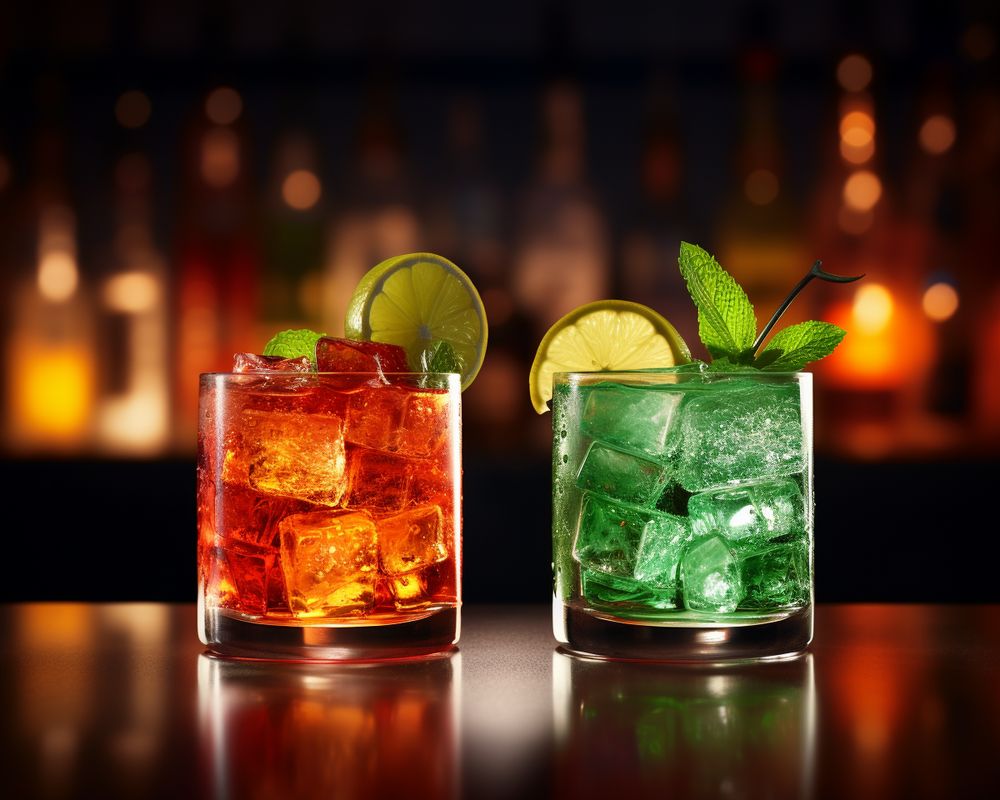
Mojito vs Negroni: A Deep Dive into their Taste Profile
Basic Tastes
- Mojito: The Mojito is a refreshing blend of sweetness from the sugar, sourness from the lime, and bitterness from the mint leaves. There’s no saltiness or umami, but a slight spiciness can be detected if it’s made with spiced rum.
- Negroni: The Negroni offers a more complex taste profile with its distinct bitterness from the Campari, sweetness from the vermouth, and a hint of sourness from the orange peel garnish. It lacks the saltiness, umami, and spiciness.
Other Taste Profile Factors
- Mojito: A Mojito is known for its cool temperature, smooth texture, and minty aroma. The mouthfeel is light and crisp, and the aftertaste is fresh and slightly sweet.
- Negroni: A Negroni, on the other hand, is room temperature, with a thicker texture and a strong aroma of bitter orange. The mouthfeel is rich and full, and the aftertaste is long and bitter.
Considerations
Mojito: The Mojito is a well-balanced cocktail with a harmony of sweet and sour flavors. It’s relatively simple in terms of complexity, but the intensity of the flavors is high, and the contrast between the sweet and sour elements is striking.
Negroni: The Negroni is a cocktail that’s all about balance and harmony. The complexity is high due to the combination of bitter, sweet, and sour flavors. The intensity is also high, and the contrast between the sweetness of the vermouth and the bitterness of the Campari is what makes this cocktail stand out.
💡 While both the Mojito and Negroni are well-balanced cocktails, the Mojito is more refreshing and light, making it perfect for a hot summer day, while the Negroni, with its complex and intense flavors, is more suited for a relaxed evening.
Mojito vs Negroni: A Dive into Barware and Glassware
Mixing & Preparation
When it comes to the Mojito, a muddler is essential for crushing the mint and lime to release their flavors, while a cocktail shaker helps blend the ingredients together. On the other hand, the Negroni requires a mixing glass and bar spoon to stir the components gently, preserving the clarity of the drink.Serving & Presentation
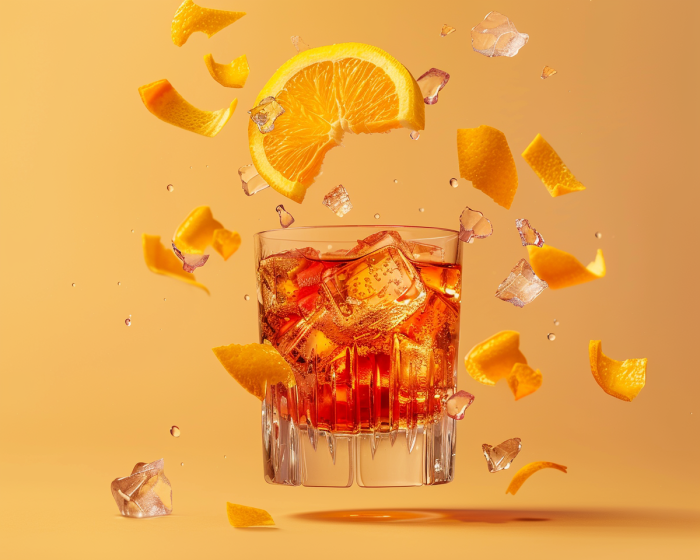
Mojitos are typically served in a highball glass to accommodate the abundance of crushed ice, while Negronis are often presented in a lowball glass, showcasing its deep red color. Both drinks are garnished, Mojitos with a sprig of mint, and Negronis with a twist of orange peel.Storage & Organization
Speed pourers and liquor pour spouts are important for both cocktails, ensuring precision and consistency. An ice bucket and tongs are also handy, especially for the Mojito which requires a generous amount of ice.Garnishing & Fine Detailing
A cutting board and knife are needed for both cocktails, for slicing limes for the Mojito and peeling oranges for the Negroni. A citrus juicer is also useful for the Mojito, to extract fresh lime juice.Preservation & Enhancement
While neither cocktail typically requires preservation, a wine aerator can be used when making a Negroni to open up the flavors of the vermouth.💡 Despite their differences in mixing and serving techniques, both the Mojito and Negroni rely heavily on the quality of their ingredients and the precision of their preparation. The correct barware and glassware can significantly enhance the cocktail experience, from the mixing process to the final sip.
Mojito vs Negroni: A Battle of Cocktail Versatility
Best Occasions for Mojito and Negroni
When it comes to choosing the perfect cocktail for an occasion, the Mojito and Negroni offer unique experiences. For a fun, tropical vibe at a beach day, barbecue, or a summer music festival, a Mojito is a refreshing choice. On the other hand, a Negroni, with its bold and bitter flavor, is a sophisticated option for corporate parties, art galas, and date nights.
Seasonal Pairings
Seasons also play a significant role in cocktail selection. The Mojito, with its minty freshness, is a summer staple, perfect for cooling off on hot days. In contrast, the Negroni, with its robust and warming flavors, is a great companion for the colder months of autumn and winter.
Celebratory Events
Whether it’s a wedding, a graduation celebration, or a birthday party, both cocktails can add a touch of elegance. A Mojito, with its light and sweet taste, is a crowd-pleaser at casual, festive events like a family reunion or a girls’ night out. Meanwhile, the Negroni, with its complex flavor profile, is a classy choice for more formal occasions like award ceremonies or product launches.
💡 Remember, the best cocktail is the one that suits your taste and the ambiance of the occasion. Whether it’s the sweet, refreshing Mojito or the bold, bitter Negroni, both cocktails offer a unique drinking experience that can enhance any event or season.
Mojito vs Negroni: Ingredient Accessibility
Mojito Ingredients
The Mojito is a classic Cuban cocktail that requires five main ingredients: white rum, sugar (or simple syrup), lime juice, soda water, and fresh mint leaves. These ingredients are relatively easy to find in most supermarkets or liquor stores, making the Mojito a convenient cocktail to mix at home.
Negroni Ingredients
On the other hand, the Negroni, an iconic Italian cocktail, requires equal parts of gin, vermouth rosso, and Campari. While gin and vermouth are commonly available, Campari, a bitter Italian liqueur, might be slightly harder to source, especially in smaller towns or rural areas.
Comparative Table
| Ingredients | Availability |
|---|---|
| Mojito | High |
| Negroni | Medium |
💡 While both cocktails have their unique charm, the Mojito’s ingredients are more readily available, making it a more accessible choice for at-home mixologists. However, the Negroni’s slightly more elusive ingredients could provide an exciting challenge for cocktail enthusiasts looking to expand their mixing skills.
Cocktail Variations: Mojito vs Negroni
Mojito Variations
1. Raspberry Mojito: A fruity twist on the classic Mojito, the Raspberry Mojito incorporates muddled raspberries for a sweet and tart flavor profile.2. Coconut Mojito: This tropical variation swaps traditional soda water for coconut water, and adds a hint of cream of coconut for an island-inspired sip.Negroni Variations
1. Negroni Sbagliato: Meaning “mistaken” in Italian, this version replaces gin with sparkling wine for a lighter, bubbly take on the classic.2. White Negroni: This variation uses Suze, a French aperitif, and Lillet Blanc in place of Campari and sweet vermouth, resulting in a lighter, more floral cocktail.| Mojito Variations | Negroni Variations |
|---|---|
| Raspberry Mojito, Coconut Mojito | Negroni Sbagliato, White Negroni |
Flavor Profiles
Mojito variations tend to lean towards the sweeter, fruitier side, with the classic lime and mint flavors pairing well with a wide range of fruits. Negroni variations, on the other hand, often experiment with the bitterness and botanicals of the cocktail, introducing new spirits and aperitifs to change the flavor profile while keeping the spirit of the original.💡 While both cocktails have a wide range of variations, Mojito variations are often more accessible and beginner-friendly due to their sweeter flavor profiles. Negroni variations, with their complex and often bitter flavors, may be more suited to the seasoned cocktail enthusiast.
Mojito vs Negroni: The Cost Breakdown
Mojito Ingredients Cost
- White Rum (low-end: Bacardi – $15, high-end: Havana Club – $25)
- Fresh Mint (around $2)
- Lime (around $0.50)
- Sugar (around $2)
- Soda Water (around $1)
Negroni Ingredients Cost
- Gin (low-end: Gordon’s – $15, high-end: Tanqueray No. Ten – $40)
- Campari (around $30)
- Sweet Vermouth (low-end: Martini – $10, high-end: Carpano Antica – $30)
Cost Comparison
| Mojito | Negroni |
|---|---|
| Low-end total: $20.50 | Low-end total: $55 |
| High-end total: $30.50 | High-end total: $100 |
Verdict
The Mojito is generally cheaper to make than the Negroni, whether you opt for lower-end or higher-end brands. The cost of Campari and high-end gin significantly drives up the price of a Negroni.
💡 Despite the cost difference, the choice between a Mojito and Negroni often comes down to personal taste preference. The Mojito offers a refreshing, minty flavor, while the Negroni provides a more bitter, complex taste profile.
Mojito vs Negroni: Prep & Mix Time
Total Preparation Time
Mojito: 10 minutes
Negroni: 5 minutes
Mixing Time
Mojito: 5 minutes
Negroni: 2 minutes
Complexity of Preparation
Mojito: Medium
Negroni: Easy
Ingredient Preparation
- Mojito: Fresh mint leaves, lime, white rum, sugar, soda water
- Negroni: Campari, gin, vermouth rosso, orange peel
Mixing Techniques
Mojito: Muddling and stirring
Negroni: Stirring
Presentation
- Mojito: Served in a highball glass with a mint sprig and lime wedge
- Negroni: Served in an old fashioned glass with an orange peel
Set Up
Mojito: Requires a muddler and a long spoon
Negroni: Requires a mixing glass and a bar spoon
Cleanup
Mojito: Rinse muddler, glass, and spoon
Negroni: Rinse glass, spoon, and strainer
Waiting Time
Mojito: None
Negroni: Chill for 2 minutes
Expert Tips
Mojito: Use fresh mint for the best flavor
Negroni: Use equal parts of all liquors for a balanced flavor
💡 While the Mojito takes a bit longer to prepare and has more ingredients, its refreshing and complex flavors make it worth the effort. On the other hand, the Negroni, with its simple preparation and fewer ingredients, offers a robust and bitter taste, ideal for those who prefer a stronger cocktail.
Mixology Hacks for the Perfect Blend: Mojito vs Negroni
Muddling Right
For a Mojito, muddle fresh mint leaves gently to release their aroma. For a Negroni, there’s no muddling involved.
Ice Matters
Use large ice cubes for Negroni to slow down dilution. For Mojito, crushed ice is preferred for a refreshing sip.
Shake vs Stir
Shake your Mojito to mix the ingredients well. Conversely, stir your Negroni to maintain its clarity.
Balancing Act
Mojito requires a balance of sweet (sugar), sour (lime), and bitter (mint). Negroni is about balancing bitter (Campari), sweet (vermouth), and strong (gin).
Herb Infusion
Infuse your Mojito with fresh mint leaves for a refreshing touch. Negroni doesn’t require any herb infusion.
Aromatic Bitters
While Mojito doesn’t need bitters, a classic Negroni includes a dash of aromatic bitters for complexity.
Smoke Effects, Double Straining, and Perfect Presentation
These elements aren’t necessary for either Mojito or Negroni. Their beauty lies in their simplicity.
Glassware
Enjoy your Mojito in a highball glass and your Negroni in an old-fashioned glass.
Garnish Game
Adorn your Mojito with a mint sprig and your Negroni with an orange peel for an elevated look and taste.
Temperature
Both Mojito and Negroni are best served cold. Ensure your glass is chilled before pouring.
Mixology Techniques for Beginners
Start with Mojito as it’s easier to make. Once you’ve mastered it, try crafting a Negroni.
How to Balance Flavors in a Cocktail
Remember the rule of balance. For every strong ingredient, balance it with a weak and a flavoring one.
Clarified Cocktails and Dehydrated Garnish
These advanced techniques aren’t necessary for Mojito or Negroni. Keep it simple and focus on the basics.
Freeze & Squeeze
Freeze your glasses for a chilled effect. Squeeze fresh lime for Mojito and fresh orange for Negroni.
💡 Crafting signature cocktails at home is about understanding the balance of flavors. Once you’ve mastered it, you can experiment with different ingredients to create your unique blend.
Mojito vs Negroni: A Deep Dive into Alcohol Content
Mojito Alcohol Content
The Mojito, a refreshing cocktail hailing from Cuba, typically contains 10-15% ABV (Alcohol by Volume). The ABV can vary depending on the amount of rum used. Here’s a quick breakdown:
- Rum (40-50% ABV)
- Mint leaves, lime, sugar, and soda water (0% ABV)
Negroni Alcohol Content
The Negroni, a classic Italian cocktail, is known for its stronger punch, with an ABV of around 24-30%. This is due to the equal parts of its three key ingredients:
- Gin (37.5-50% ABV)
- Campari (24% ABV)
- Sweet Vermouth (16-18% ABV)
Alcohol-Free Alternatives
For those seeking a non-alcoholic twist, there are mocktail versions of both the Mojito and Negroni. Here’s how:
Mojito Mocktail: Replace rum with extra soda water or non-alcoholic rum. Keep the mint leaves, lime, and sugar.
Negroni Mocktail: Swap out gin for non-alcoholic gin, and replace Campari and sweet vermouth with a mix of non-alcoholic bitter aperitif and red grape juice.
💡 Unique insight: The alcohol content of a cocktail can significantly change its flavor profile. The Mojito, with its lower alcohol content, has a lighter, more refreshing taste, while the Negroni, with its higher alcohol content, offers a stronger, bolder flavor.
Nutritional Information: Mojito vs Negroni
Caloric Intake
- Mojito: Approximately 242 calories
- Negroni: Roughly 186 calories
Spirits and Mixers
Mojito is made with white rum and soda water, while Negroni combines gin, vermouth, and Campari.
Sugar Content and Simple Syrups
- Mojito: Contains raw sugar and simple syrup
- Negroni: Includes sweet vermouth which has sugar
Pre-mixed Cocktails
Pre-mixed versions of both Mojito and Negroni are available, but their nutritional values may vary based on the brand.
Carbohydrates and Proteins
| Mojito | Negroni |
|---|---|
| Approximately 25g of carbohydrates, minimal protein | About 16g of carbohydrates, negligible protein |
Fats and Vitamins
Both Mojito and Negroni have negligible fat content and minimal vitamins.
Allergens, Gluten, and Other Factors
- Mojito: Contains no nuts or gluten
- Negroni: Gluten-free but vermouth may contain traces of nuts
Low-calorie and Sugar-free Options
Light rum can be used in Mojito for a lower-calorie version. For a sugar-free Negroni, opt for a sugar-free sweet vermouth.
💡 Despite their delicious taste, both Mojito and Negroni are high in sugar. Opt for their sugar-free versions or consume in moderation to maintain a balanced diet.
High Quality Facts: Mojito vs Negroni
The Mojito: A Refreshing Classic
The Mojito, a Cuban classic, is a blend of white rum, fresh lime juice, sugar, mint leaves, and soda water. It’s known for its refreshing, crisp taste, making it a popular choice for summer gatherings.
The Negroni: A Bold Italian Staple
The Negroni, a traditional Italian cocktail, combines equal parts gin, vermouth rosso, and Campari. Its distinctive bitter-sweet flavor and vibrant red color make it a standout choice for cocktail enthusiasts.
Ingredients Comparison
| Mojito | Negroni |
|---|---|
| White Rum | Gin |
| Fresh Lime Juice | Vermouth Rosso |
| Sugar | Campari |
| Mint Leaves | N/A |
| Soda Water | N/A |
Flavor Profiles
- Mojito: Crisp, refreshing, with a hint of minty sweetness.
- Negroni: Bold, bittersweet, with a complex flavor profile.
Best Time to Enjoy
Mojito: Best enjoyed on a hot summer day.
Negroni: Perfect for sipping in the evening, before a meal.
💡 While both cocktails have their unique characteristics, the choice between a Mojito and a Negroni ultimately depends on personal preference. If you prefer a refreshing, lighter cocktail, go for a Mojito. If you enjoy a bolder, more complex flavor, a Negroni is the way to go.
Mojito vs Negroni: A Deep Dive into Two Classic Cocktails
What are the main ingredients of a Mojito and a Negroni?
A classic Mojito is made with white rum, fresh lime juice, sugar, mint leaves, and soda water. On the other hand, a Negroni is a blend of equal parts gin, sweet vermouth, and Campari.
How are Mojito and Negroni prepared?
For a Mojito, muddle the mint leaves and sugar in a glass, add the lime juice and rum, fill the glass with crushed ice, top it off with soda water, and stir. A Negroni is prepared by stirring the gin, vermouth, and Campari over ice in a mixing glass, then straining it into a chilled cocktail glass.
What alcohol brands are commonly used in these cocktails?
Mojitos often use Bacardi or Havana Club rum, while Negronis are usually made with Beefeater or Tanqueray gin.
What barware is needed to make these cocktails?
To make a Mojito, you need a muddler, a bar spoon, and a highball glass. For a Negroni, you’ll need a mixing glass, a bar spoon, and a strainer.
What food pairings work well with these cocktails?
Mojitos pair well with spicy foods, seafood, and tropical fruits, while Negronis complement rich, fatty foods like cheese and charcuterie.
How are these cocktails presented?
A Mojito is usually garnished with a sprig of mint and a slice of lime, and served in a highball glass. A Negroni is typically garnished with an orange peel and served in an old-fashioned glass.
What is the calorie content and allergy information for these cocktails?
A Mojito has about 242 calories and contains no common allergens. A Negroni has around 186 calories and also contains no common allergens.
How much does it cost to make these cocktails?
The average cost to make a Mojito is around $2.00, while a Negroni costs about $3.50.
What is the alcohol content (ABV percentage) of these cocktails?
A Mojito has an ABV of around 13%, while a Negroni has a much higher ABV of 24%.
Unique Insight: While both cocktails have their origins in the early 20th century, the Mojito and Negroni offer distinctly different drinking experiences. The Mojito, with its refreshing mint and lime, is perfect for a hot summer day, while the Negroni, with its bitter and complex flavors, is more suited to a sophisticated evening gathering.