Key Differences
Taste Profile: The Bloody Mary is known for its hearty tomato and spice blend, whereas the Bloody Caesar introduces a unique clamato twist for an oceanic umami sensation.
Signature Twist: A crucial ingredient swap sets them apart: while Bloody Mary banks on pure tomato juice, Bloody Caesar stakes its claim with clamato juice, offering a seafood-infused edge.
Cultural Footprint: The Bloody Mary carries with it the storied past of 20th century bars, while the Bloody Caesar stands as a point of Canadian pride, a cherished national cocktail since 1969.
Bloody Mary: The Timeless Brunch Classic
A symbol of brunch culture, the Bloody Mary artfully blends vodka’s clean notes with tomato juice’s rich savoriness and a mix of herbs and spices.
Taste Profile: Bold tomato juice laced with pepper, citrus, and Worcestershire, creating a savory and slightly spicy experience.
Key Ingredients: Essential components are vodka, tomato juice, lemon juice, Worcestershire sauce, spices, and celery.
Alcohol Content: Generally houses around 10-15% ABV, striking a nice balance between spirit and mixer.
Popularity: A quintessential staple in bars worldwide, loved for its hearty flavor and restorative reputation.
Origin: Its creation is often attributed to the New York bar scene in the early 20th century.
Primary Alcohol: Vodka, the spirit of choice, provides a smooth canvas for the robust mixers.
Preparation Time: Moderate, taking about 7 minutes to mix and garnish for that perfect sip.
Best Occasions: The go-to for leisurely weekend brunches or as a revered hangover remedy.
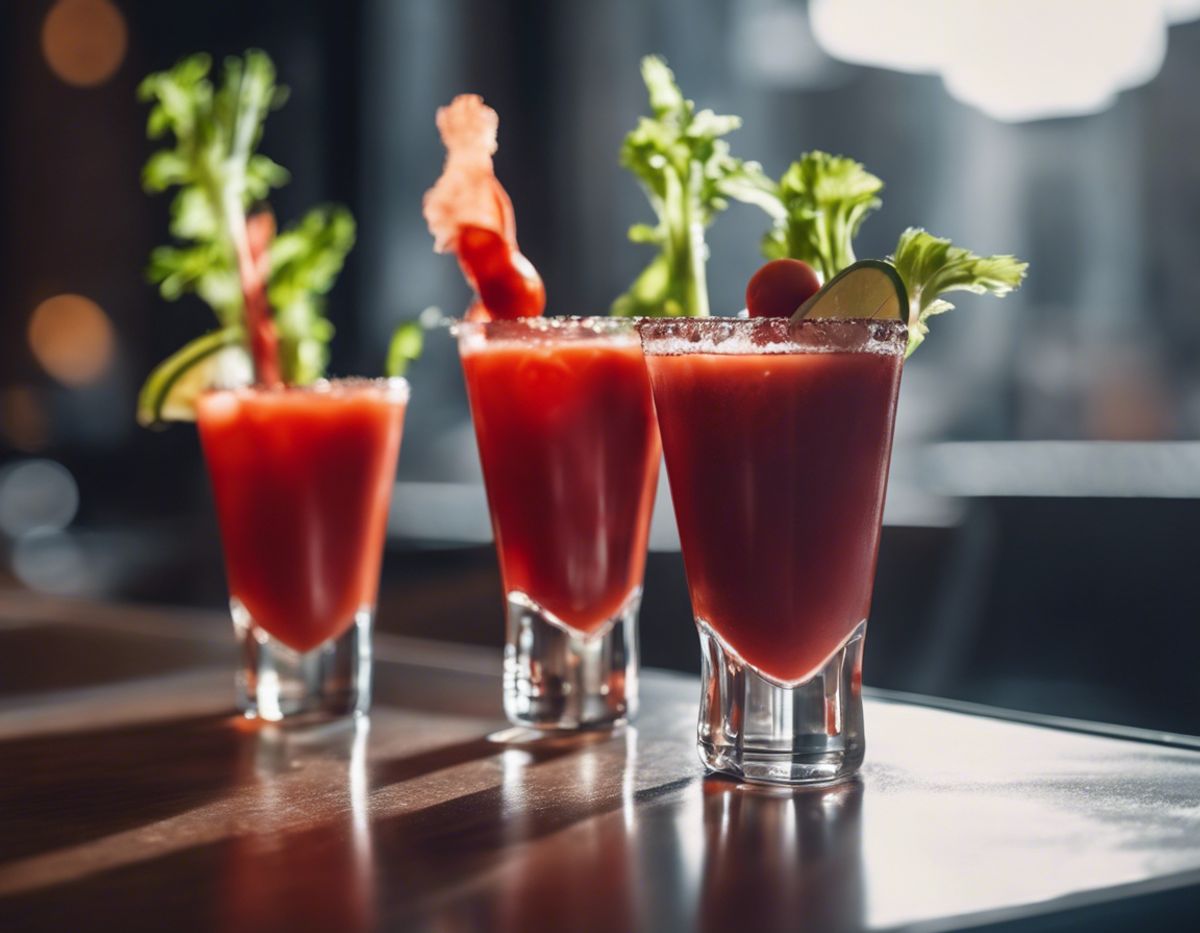
Visual Appeal: Garnished with celery and sometimes olives or pickles, it’s as much a treat for the eyes as for the palate.
Glassware and Barware: Served in a tall glass, like a highball, with ample space for garnishes, stirred with a long spoon.
Nutritional Information: About 125 calories per serving, with the mixers contributing to the bulk of it.
Variations: Tailored with different heat levels, from mild to extra spicy, or adorned with an array of elaborate garnishes.
Complexity: While the ingredients list is straightforward, achieving the perfect spice and flavor balance requires a skilled hand.
Bloody Mary vs Bloody Caesar: A Spirited Showdown of Brunch Favorites
Comparing the savory Bloody Mary with the uniquely Canadian Bloody Caesar reveals insights into their taste, history, and cultural significance.
Taste Profile: The Bloody Mary is robust and spicy with a tomato tang, whereas the Bloody Caesar has a briny, umami-rich taste.
Key Ingredients: Bloody Mary mixes tomato juice, spices, and lemon, while Bloody Caesar adds clamato juice for a distinctive flavor.
Alcohol Content: Both contain around 10-15% ABV, delivering a moderate kick that enlivens the brunch experience.
Popularity: The Bloody Mary is globally beloved at brunches, and the Bloody Caesar reigns supreme throughout Canada.
Origin: The Bloody Mary hails from 1920s Paris or New York; the Bloody Caesar was born in Calgary, Alberta, in 1969.
Primary Alcohol: Both feature vodka as the alcohol base, providing a clean, neutral canvas for the rich flavors.
Preparation Time: Whipped up in under 5 minutes, these are quick, hearty drinks perfect for a leisurely morning.
Best Occasions: Ideal for brunch, social mornings, or a pick-me-up, these drinks are synonymous with relaxed weekend vibes.
Visual Appeal: Bloody Mary’s bright red allure pairs with varied garnishes, while the Caesar’s garnishes often include a celery stick.
Glassware and Barware: Served in tall glasses, both require a shaker or stirring utensils for a well-blended drink.
Nutritional Information: Expect about 120-180 calories; both can be altered for dietary needs with various ingredients.
Variations: The Mary can go spicy or herbal; the Caesar sees horseradish or hot sauce variations catering to personal tastes.
Complexity: Both drinks allow for creativity but getting the spice and flavor combinations right is key to their appeal.
The Next Cocktail’s Insights
Exploring the Bloody Mary and the Bloody Caesar brings us on a savory journey of brunch cocktails. While they share a vodka base and similar alcohol content, unique differences set them apart. The Bloody Mary stands out with its bold, spicy flavor rooted in tomato, gaining international fame. The Caesar, with its Canadian origins, offers a zestier take with clamato juice, enchanting those who crave a seafood twist. Both cocktails cater to a leisurely brunch with their engaging flavors and visual garnishes.
From an expert’s seat, if your brunch calls for a classic, go for the Bloody Mary, with its rich history and hearty taste. But, if you’re eager to shake things up, the Bloody Caesar delivers a uniquely Canadian, umami-packed punch that’s sure to impress. Ultimately, the best pick hinges on whether you desire the traditional tang of tomato or the briny bite of clamato.