Guacamole Recipe
- Step 1: Prepare the avocados Begin by slicing the avocados in half, remove the pit, and scoop the flesh into a medium-sized bowl.
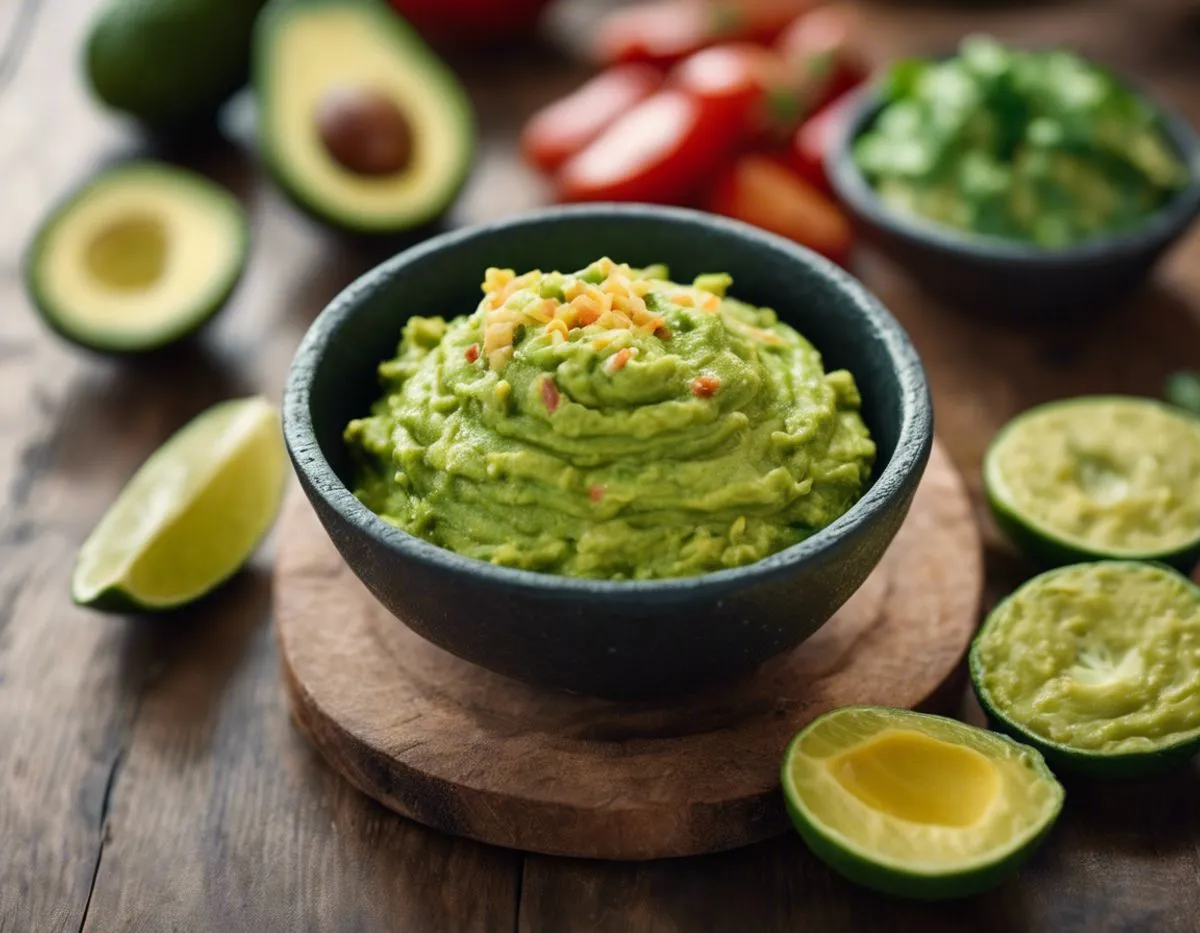
- Step 2: Mash avocados Use a fork or a potato masher to mash the avocados, retaining some chunks for texture gently. Be careful not to overdo it—you want a mix of smooth and chunky.
- Step 3: Add flavor enhancers To the mashed avocados, add the lime juice, diced tomatoes, finely chopped red onion, minced garlic, chopped cilantro, and finely chopped jalapeño. These ingredients infuse the base with layers of flavor.
- Step 4: Season the guacamole Season the mixture with sea salt and ground black pepper. Give it a taste and adjust the seasonings as needed, ensuring a balanced flavor profile.
- Step 5: Mix well Stir all the ingredients together until the mixture is well combined. This distributes the various flavors throughout the guacamole.
- Step 6: Serve and enjoy Transfer the guacamole into a serving dish. It can be enjoyed immediately but letting it sit for a few minutes allows flavors to meld beautifully. Serve with tortilla chips, crudites, or as a compliment to other dishes.
Guacamole Ingredients
- Ripe avocados: 3 large (approximately 600g / 21 oz) – the star component with a buttery texture.
- Fresh lime juice: 30ml (1 oz) – brightens the flavor.
- Roma tomatoes: 120ml (4 oz) diced – adds a juicy crunch.
- Red onion: 60ml (2 oz) finely chopped – for a sharp, zesty kick.
- Cilantro: 15ml (0.5 oz) chopped – lends a fresh, herby note.
- Fresh garlic: 5ml (0.17 oz) minced – to enhance savoriness.
- Jalapeño pepper: 15ml (0.5 oz) finely chopped – for a hint of heat.
- Sea salt: 5ml (0.17 oz) – brings out the flavors.
- Ground black pepper: 2ml (0.07 oz) – to taste.
Key Takeaways
- Perfect Your Guacamole: Master the art of creating creamy, vibrant guacamole with a perfect balance of flavor and texture.
- Choose the Right Avocados: Ripe, quality avocados are critical for a rich buttery taste.
- Experiment with Flavors: Explore adding different herbs and spices to tailor guacamole to your taste.
Guacamole Chef Cooking Tips
For those who are keen to craft the perfect snack, delving into the art of guacamole making is a must. The goal? A rich, creamy, and vibrant dip that is as pleasing to the eye as it is to the palate. Below, find three professional chef tips to boost your guacamole game and impress any food enthusiast.
- Select the Right Avocados: The foundation of any guacamole is the avocado itself. Opt for Hass avocados, ideally at the peak of ripeness, which feel slightly soft when gently pressed. The creamy flesh of ripe avocados blends smoothly, creating the perfect texture for your guacamole. To test for ripeness without bruising the fruit, flick the dry stem off the top. If it comes away easily and you see green underneath, the avocado is ripe. If you see brown, the avocado may be overripe, and if the stem doesn’t come away at all, the avocado will need a few more days to ripen.
- Balance Your Flavors: Guacamole is all about balance. Start with the basics – ripe avocados, lime juice, and salt. From there, consider adding finely chopped onions, cilantro, and fresh chili for a kick. But be cautious with proportions; too much onion or cilantro can overpower the delicate avocado flavor. Use lime juice not only for its tanginess but also to keep your guacamole bright green. Add lime gradually and taste as you go to find the perfect zing.
- Texture is Key: The perfect guacamole texture is subjective, but generally, it should be slightly chunky with a creamy consistency. To achieve this, use a fork or a potato masher rather than a food processor. Gently crush the avocados, leaving some small chunks for a satisfying mouthfeel. For some added texture, fold in diced tomatoes after mashing – just make sure to remove the seeds and pulp to prevent your guacamole from becoming watery.
Guacamole’s Perfect Complements
- Crispy Tortilla Chips: To savor the creamy texture and rich flavors of guacamole, there’s nothing quite like the classic crunch of tortilla chips. Opt for lightly salted varieties that enhance the avocado blend without overpowering it. Scooping just the right amount of guacamole on a chip provides a well-balanced bite every time. For an authentic experience, enjoy with handmade tortilla chips, warmed for a toasty finish.
- Grilled Chicken: Grilled chicken serves as an exceptional pairing for guacamole. The subtle charred taste and the savory spices of the poultry elegantly complement the freshness of the guacamole. Slice the chicken into strips or cubes, and layer it with a dollop of this avocado delight for a nourishing, protein-packed meal. Inject extra flavor by using chicken marinated in citrus to echo the lime notes found in many guacamole recipes.
- Quinoa Salad: If you’re leaning towards a nutritious and hearty companion for your guacamole, look no further than a colorful quinoa salad. The nutty flavor profile of quinoa combined with a medley of fresh vegetables, like sweetcorn, tomatoes, and red onion, provides a diverse palette of tastes and textures. Add a generous spoonful of guacamole to your salad for a creamy contrast and an extra boost of healthy fats.
Popular Variations of Guacamole
- Spicy Guacamole: This fiery twist on the traditional guacamole is for those who love a little extra heat in their dip. To achieve this, include diced jalapeños or serrano peppers. Depending on your spice tolerance, you can adjust the quantity of the peppers. A hint of cayenne pepper or a splash of hot sauce can also amplify the kick.
- Mango Guacamole: Fruit additions in guacamole can be quite delightful, and mango guacamole is a tropical favorite. The sweetness of the ripe mango provides a perfect balance to the rich, creamy avocado. Finely chopped mango mixed into the standard guacamole recipe introduces a unique, refreshing taste and an appetizing pop of color.
- Guacamole with Greek Yogurt: For a creamier taste and additional protein, some health enthusiasts are now incorporating Greek yogurt into their guacamole. The Greek yogurt adds a tangy flavor and smooth texture, making it even more indulgent. Usually, a couple of tablespoons of Greek yogurt per avocado should suffice.
- Bacon Guacamole: Everything tastes better with bacon, they say, and guacamole is no exception. Crispy, diced bacon lends a smoky, savory dimension that complements the richness of the avocado. It’s a popular variation for those who want to add a bit more substance and crunch to their snack.
- Roasted Garlic Guacamole: Garlic lovers might find solace in this version, where instead of raw garlic, roasted garlic is used. Roasting garlic mellows its sharpness and brings out its sweet, nutty characteristics, which melds seamlessly with the buttery avocado. The exact quantity can be adapted to suit one’s preference, but usually one roasted clove per avocado is a good starting point.
Whether you’re looking to add extra heat, a punch of sweetness, a tangy twist, a meaty bite, or a nuttier nuance, these guacamole variations can cater to all palates and preferences. Remember, the best guacamole is the one you make to your own taste, so feel free to experiment and find your perfect combination.
Frequently Asked Questions about Guacamole
What exactly is guacamole?
Guacamole is a traditional Mexican dip made primarily from avocados. Its other staple ingredients include lime juice, cilantro, onions, tomatoes, and often jalapeños or other types of chili to add a touch of heat.
Can you trace guacamole back to its origins?
Sure! Guacamole has its roots deeply embedded in Aztec culture dating back to the 16th century. It was originally made by mashing ripe avocados with a mortar and pestle and mixing in tomatoes and salt.
What are the ideal avocados for making guacamole?
The Hass variety, with its creamy texture and rich flavor, is considered the best type of avocado for guacamole. However, any ripe avocado can be used to prepare this dish.
How can you tell if an avocado is ripe enough for guacamole?
A ripe avocado will yield to gentle pressure without feeling mushy, and the skin often turns from green to a darker brownish-green color. Checking the stem end can also give clues; if it comes away easily and you find green underneath, the avocado is ripe.
What is the traditional way to prepare guacamole?
Traditionally, guacamole is made by mashing ripe avocados and mixing them with lime juice, salt, minced onion, cilantro, and diced tomatoes. The ingredients can be adjusted to taste, and some versions also include garlic or additional spices.
Is guacamole healthy to eat?
Yes, guacamole is rich in nutrients. Avocados are high in monounsaturated fats, which are heart-healthy. They also contain fiber, potassium, and several essential vitamins.
What dishes pair well with guacamole?
Guacamole is incredibly versatile. It can be enjoyed with tortilla chips, used as topping for tacos, burritos, and nachos, or served alongside grilled meats and vegetables.
How do you prevent guacamole from turning brown?
To prevent browning, press plastic wrap directly onto the surface of the guacamole to minimize air exposure and store it in the refrigerator. Adding lime or lemon juice, which act as antioxidants, can also help reduce browning.
Can guacamole be frozen for later use?
Yes, although texture may be affected. For best results, freeze guacamole in airtight containers or freezer bags. When ready to use, thaw it in the refrigerator for several hours or overnight.
Does guacamole have any cultural significance?
Guacamole is not just a delicious dish but also a symbol of Mexican heritage. It’s a staple at festive gatherings and has been embraced by various cultures around the world as a representation of Mexican cuisine.
How should guacamole be seasoned?
Season guacamole to taste with salt, which enhances the flavors. You can also add ground black pepper, cumin, or chili powder for extra depth. The key is to balance the creaminess of the avocado with the acidity of lime juice and the savory notes of the seasonings.
Which variations of guacamole can I try?
There are countless variations to explore. Some incorporate fruits like mango or pineapple for a sweet twist, while others feature ingredients like pomegranate seeds, roasted corn, or bacon for added texture and flavor.
What’s the best way to serve guacamole at a party?
Serving guacamole in a traditional molcajete (stone mortar) can add an authentic touch. Pairing the dip with a variety of chips and fresh veggie sticks ensures everyone has something to enjoy.
Can guacamole contribute to special dietary needs?
Absolutely! This nutrient-dense dip is inherently gluten-free, vegan, and suitable for those on a low sugar diet, making it a crowd-pleaser for people with various dietary restrictions.
What are the most important tips for making perfect guacamole?
The keys are using ripe avocados, adding fresh lime juice, seasoning it well with salt, and incorporating fresh ingredients for texture and flavor. Remember, the quality of the avocados is paramount.
Are there any no-no’s when making guacamole?
Try to avoid over-mashing the avocados, as having some chunks can add nice texture. Also, steer clear of using overpowering ingredients that can dominate the delicate flavor of the avocados.
What is the history behind the name ‘guacamole’?
The name ‘guacamole’ comes from the Nahuatl word “āhuacamolli,” which translates to “avocado sauce.” The word reflects the dish’s indigenous Mexican origins.
Is it possible to make guacamole without cilantro?
Yes, if you’re not a fan of cilantro or if you’re catering to those with an aversion to the herb, you can simply omit it or substitute with flat-leaf parsley for a fresh, herby taste without the cilantro flavor.
How do you store leftover guacamole to maintain freshness?
Leftover guacamole should be stored in an airtight container with plastic wrap pressed onto the surface to reduce oxidation. When stored in the refrigerator, it can stay fresh for a day or two.
Does guacamole only come in one color?
While the base of guacamole is the green flesh of avocados, the addition of ingredients like red tomatoes, white onions, and green cilantro can vary the overall color and texture of the dip.
What kind of onions are best in guacamole?
Typically, mild-flavored white or red onions are preferred in guacamole. They offer a crisp contrast without overwhelming the other flavors. However, you could also use green onions for a milder taste.
Can guacamole be made in a food processor or blender?
While a food processor or blender can be used for convenience, they can easily over-process the guacamole, resulting in a less desirable texture. Hand-mashing ensures the best control over the consistency.
How does guacamole fit into traditional Mexican cuisine?
Guacamole is a fundamental part of Mexican gastronomy, often used to complement dishes like fajitas, enchiladas, and carne asada, and it embodies the simplicity and freshness characteristic of Mexican fare.
Is it possible to make a spicy guacamole?
Definitely! To kick up the heat, add finely chopped jalapeños, serrano chilies, or even a bit of cayenne pepper. Be sure to start with a small amount and adjust according to your preferred spice level.
What must one avoid to keep guacamole from becoming watery?
To prevent a watery guacamole, thoroughly drain any wet ingredients like tomatoes before adding them and serve the guacamole soon after preparation. Excessive mashing can also extrude moisture from the avocado, so be careful not to overdo it.