Mimosa vs Martini: A Deep Dive into Taste Profile
Basic Tastes
Mimosa: The Mimosa is a sweet and slightly sour cocktail, made from freshly squeezed orange juice and champagne. It lacks umami, saltiness, and spiciness.
Martini: A classic Martini is more bitter and salty due to the gin and dry vermouth. It also holds a hint of umami from the green olive garnish, with no sweetness or spiciness.
Other Taste Profile Factors
Mimosa: It has a refreshing citrus aroma, a light texture with carbonation from the champagne, served cold, leaves a sweet aftertaste.
Martini: The Martini presents a herbal aroma, a smooth texture, served chilled, and often leaves a strong alcoholic aftertaste.
Considerations
Mimosa: It’s a balanced and harmonious blend of sweet and sour, with a simple complexity, mild intensity, and no contrast.
Martini: The Martini is a cocktail of contrasts, with a complex mix of bitter and salty, high intensity, yet achieves harmony and balance.
💡 While both cocktails are served cold, the Mimosa is ideal for daytime drinking due to its lower alcohol content, while the Martini, with its strong alcoholic aftertaste, is often preferred in the evening.
Mimosa vs Martini: A Deep Dive Into Barware and Glassware
Mixing & Preparation
- Mimosa: This brunch classic requires a simple cocktail shaker for the orange juice and champagne concoction, with a jigger to ensure the perfect 1:1 ratio. Ice molds can add a touch of sophistication.
- Martini: The queen of cocktails, Martini, calls for a mixing glass and a bar spoon to stir the gin and vermouth. The Hawthorne strainer ensures a smooth pour, while an ice crusher is crucial to achieve the perfect chill.
Serving & Presentation
- Mimosa: Typically served in a tall, elegant champagne flute, the Mimosa’s vibrant color is accentuated. A simple orange slice garnish completes the look.
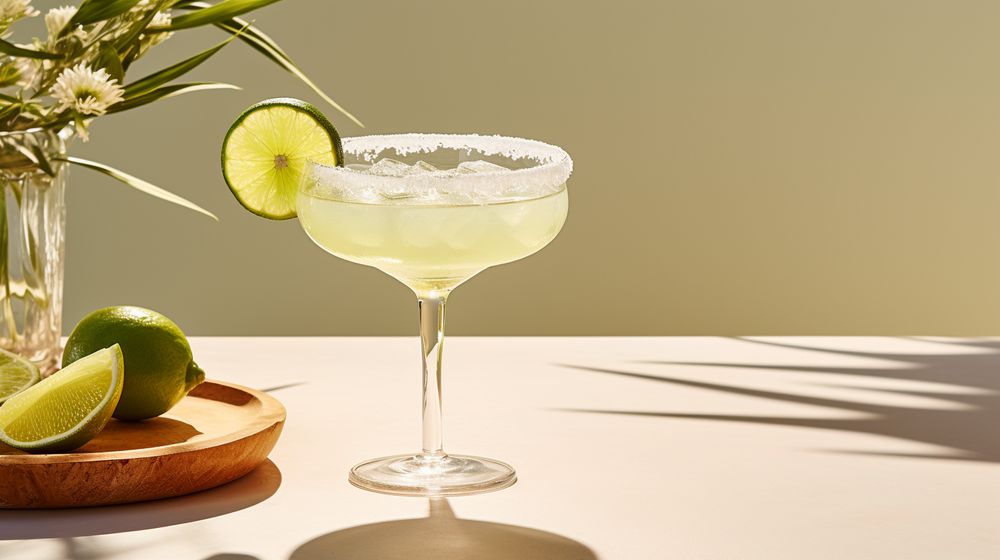
- Martini: Served in an iconic cocktail glass, the Martini’s clarity shines. A twist of lemon or an olive, presented on a garnish tray, adds the final touch.
Storage & Organization
- Mimosa: The key ingredients, champagne and orange juice, are stored in an ice bucket, with tongs for easy access. Speed pourers ensure a smooth champagne flow.
- Martini: Gin and vermouth need to be readily accessible, making bottle openers and corkscrews essential. Use a bar mat to prevent spills and keep your workspace tidy.
Garnishing & Fine Detailing
- Mimosa: A cutting board and knife are all you need for that simple, fresh orange slice.
- Martini: Here, a peeler and zester are crucial for crafting the perfect lemon twist or a channel knife for a pristine olive slice.
Preservation & Enhancement
- Mimosa: A champagne stopper is key to keep the fizz intact for the next round of Mimosas.
- Martini: As for the Martini, a wine preserver ensures the vermouth’s freshness, enhancing the overall taste.
💡 The choice between a Mimosa and a Martini goes beyond the flavor profile. It’s a choice of lifestyle, ambiance, and even the time of day. While Mimosas are a daytime delight, Martinis are the star of evening soirees. The barware and glassware involved reflect this distinction, with the Mimosa’s simplicity and the Martini’s sophistication both having their unique charm.
Mimosa vs Martini: A Dive into Cocktails Versatility
The Best Occasions for Mimosas and Martinis
While both the Mimosa and the Martini are classic cocktails, they each have their own unique vibe that pairs best with different occasions. Mimosas, with their light, fruity flavor, are perfect for daytime events such as Brunches, Beach Days, and Baby Showers. On the other hand, the sophisticated Martini, known for its strong, crisp taste, is ideal for nighttime and formal gatherings like Date Nights, Corporate Parties, and Award Ceremonies.
Seasonal Preferences
Mimosas are typically associated with warmer seasons, making them a go-to cocktail during Spring and Summer. With its refreshing citrus kick, it’s the perfect companion for soaking up the sun. Martinis, on the other hand, are a classic all-year-round cocktail. However, their bold, clear flavor particularly shines during the Autumn and Winter months, when people tend to prefer stronger, more robust drinks.
Pairing Events with Mimosas and Martinis
| Mimosa | Martini |
|---|---|
| Weddings | Product Launches |
| Holiday Parties | Retirement Parties |
| Anniversaries | Themed Parties |
💡 The Martini’s versatility extends beyond just gin and vodka. It can be customized with different garnishes and vermouths, making it adaptable to personal tastes and various occasions. Whereas the Mimosa, with its standard recipe of champagne and orange juice, is a one-size-fits-all crowd-pleaser, perfect for large gatherings where simplicity is key.
Mimosa vs Martini: Ingredient Accessibility
Mimosa Ingredients
As a classic brunch cocktail, the Mimosa is delightfully simple, requiring only two key ingredients: champagne and orange juice. These can be easily sourced from any local grocery store or supermarket.
- Champagne: This bubbly beverage is widely distributed, making it readily available in most liquor stores.
- Orange Juice: Fresh or store-bought, orange juice is a staple in many households and is easily accessible.
Martini Ingredients
Martinis, on the other hand, require a few specific ingredients that might take a bit more effort to locate:
- Gin/Vodka: Both are common spirits, but their quality can greatly impact the overall taste of the cocktail.
- Dry Vermouth: Not as common as gin or vodka, but still can be found at most liquor stores.
- Olives/Lemon Twist: As garnishes, these might not be in everyone’s pantry but are easy to pick up from any grocery store.
While both cocktails have relatively accessible ingredients, the Martini’s demand for quality spirits and the less common vermouth may make it slightly more challenging to gather its components.
💡 Despite the Martini’s perceived sophistication and the Mimosa’s simplicity, both cocktails require accessible ingredients. The real difference comes down to the quality of the spirits used and the skill in mixing them.
Mimosa vs Martini: A Stirring Cocktail Comparison
Mimosa Variations
- Classic Mimosa: This traditional brunch favorite blends equal parts chilled champagne and fresh orange juice.
- Strawberry Mimosa: A sweet twist on the classic, this version adds a splash of strawberry puree for a burst of berry flavor.
- Apple Cider Mimosa: Perfect for the autumn season, this variant uses apple cider instead of orange juice, combined with a cinnamon-sugar rim.
Martini Variations
- Classic Martini: An enduring cocktail, it’s made with gin (or vodka) and dry vermouth, garnished with an olive or a lemon twist.
- Dirty Martini: A savory take on the classic, this one includes a splash of olive brine.
- Espresso Martini: A pick-me-up cocktail, blending vodka, coffee liqueur, and freshly brewed espresso.
| Mimosa | Martini |
|---|---|
| Light & fruity | Rich & sophisticated |
| Best for brunch | Perfect for evening |
| Champagne-based | Gin or vodka-based |
💡 While both cocktails hail from different origins and have distinct flavors, they can be customized to suit individual preferences. Mimosas are perfect for those seeking a lighter, fruity drink, especially for daytime events. Martinis, on the other hand, are ideal for those who prefer a stronger, more sophisticated cocktail, perfect for evening gatherings. It’s all about finding your perfect balance.
Mimosa vs Martini: A Breakdown of Cocktail Costs
Mimosa: The Economical Elixir
A Mimosa, traditionally composed of Champagne and orange juice, tends to be on the less expensive side. Here’s a quick rundown:- Lower brand options: Freixenet Cordon Negro Brut and Tropicana Orange Juice.
- Medium brand options: Moet & Chandon Imperial Brut and Simply Orange Juice.
- High-end brand options: Dom Perignon and freshly squeezed juice from Navel Oranges.
Martini: The Luxurious Libation
Martini, with its classic blend of gin and vermouth, can be a bit pricier. Here’s what you might spend:- Lower brand options: Gordon’s Gin and Martini & Rossi Vermouth.
- Medium brand options: Bombay Sapphire and Noilly Prat Vermouth.
- High-end brand options: Hendrick’s Gin and Carpano Antica Formula Vermouth.
“For those on a budget, the Mimosa is the clear winner. But if you’re looking to splurge, a Martini with top-shelf spirits will certainly hit the spot.”
💡 While Mimosas may be cheaper, the sophistication of a Martini can add a touch of elegance to any gathering. Ultimately, the best cocktail for you will depend on your budget, taste preferences, and the ambiance you wish to create.
Mimosa vs Martini: Prep & Mix Time
Mimosa Preparation
- Total Preparation Time: 5 minutes
- Mixing Time: 1-2 minutes
- Complexity of Preparation: Easy
- Ingredient Preparation: Simply chill your champagne and juice in advance
- Mixing Techniques: Pour champagne and then top with orange juice
- Presentation: Serve in a champagne flute with a garnish of fresh fruit
- Set up: Champagne, orange juice, champagne flute, and fruit for garnish
- Cleanup: Rinse the champagne flutes and recycle the champagne bottle
Martini Preparation
- Total Preparation Time: 10 minutes
- Mixing Time: 3-5 minutes
- Complexity of Preparation: Medium
- Ingredient Preparation: Chill your gin and vermouth, prepare lemon twist or olive
- Mixing Techniques: Stir gin and vermouth with ice, strain into a glass, garnish
- Presentation: Serve in a martini glass with a lemon twist or olive
- Set up: Gin, vermouth, mixing glass, strainer, martini glass, lemon twist or olive
- Cleanup: Rinse the mixing glass, strainer, and martini glass, dispose of lemon peel or olive pit
Expert Tips: For the best Mimosa, use freshly squeezed orange juice. For the Martini, stir, don’t shake, to avoid watering down the cocktail.
💡 A unique insight is that the complexity of a cocktail does not necessarily correlate with the time it takes to prepare. A Martini, despite being more complex, takes just a few minutes longer to prepare than a Mimosa.
Mixology Hacks for the Perfect Blend: Mimosa vs Martini
Muddling Right
Martini preparation doesn’t involve muddling while a Mimosa might require light muddling if you choose to add fresh oranges. Remember, it’s all about extracting the juice, not punishing the fruit!
Ice Matters
A Martini is stirred with ice and then strained, while a Mimosa is served chilled with no ice. Key hack: The colder the ice, the less dilution.
Shake vs Stir
🍸 Martini is stirred, not shaken (despite what James Bond prefers). 🍊 Mimosa doesn’t need either; just gentle mixing.
Balancing Act
Both cocktails require a delicate balance of flavors. A Martini needs the perfect gin-vermouth ratio, while a Mimosa seeks a balance between champagne and orange juice.
Herb Infusion, Aromatic Bitters, and Smoke Effects
While these techniques can add depth to any cocktail, they’re typically absent in traditional Mimosa and Martini recipes. But, feel free to experiment!
Double Straining, Perfect Presentation
Double straining isn’t necessary for these cocktails. As for presentation, serve Martinis in a chilled glass with an olive or lemon twist. Mimosas look best in a tall champagne flute, filled halfway with juice and topped with bubbly.
Glassware and Garnish Game
Distinct glassware enhances the cocktail experience. Martinis demand a martini glass while Mimosas require a champagne flute. As for garnishes, think olives or a lemon twist for Martinis, and a fresh fruit slice for Mimosas.
Temperature
Martinis should be served ice-cold, straight from the shaker. Mimosas, on the other hand, are best served chilled, but not overly cold. Remember, temperature can affect flavor intensity.
Crafting Signature Cocktails at Home
With the right tools and techniques, you can master the art of mixology at home. All you need is high-quality ingredients, the right glassware, and a sense of adventure.
Mixology Techniques for Beginners
Start with understanding the basics of cocktail structure – base, modifying agent, and special flavorings. Then, practice techniques like muddling, stirring, shaking, and straining. Master these, and you’ll be on your way to making perfect Mimosas and Martinis.
Clarified Cocktails, Dehydrated Garnish, and Freeze & Squeeze
These advanced techniques can add a unique flair to your cocktails. While not traditionally used in Mimosas or Martinis, don’t be afraid to experiment!
💡 While both Mimosa and Martini have their unique preparation techniques, the key to a great cocktail is understanding the balance of flavors and presenting it in a way that appeals to the senses.
Mimosa vs Martini: A Deep Dive into Alcohol Content
Mimosa: A Light, Fruity Cocktail
The Mimosa, renowned for its bright, citrusy flavor, is a low-alcohol cocktail. It’s typically made with equal parts of champagne and orange juice, which results in an average Alcohol By Volume (ABV) percentage of 6-12%. This makes it a delightful option for brunches and afternoon soirees.
Martini: A Strong, Sophisticated Choice
In contrast, the Martini is a potent player in the cocktail world. Composed primarily of gin and vermouth, its ABV can range from 30% to 40%. This sleek, sophisticated drink is a staple of evening social events and cocktail parties, offering a powerful punch to the discerning drinker.
Alcohol-Free Alternatives: Mimosa and Martini Mocktails
- Mimosa Mocktail: Substitute champagne with a non-alcoholic sparkling wine or soda water. Pair with orange juice for a refreshing, alcohol-free mimosa that retains the original’s bubbly charm.
- Martini Mocktail: Combine non-alcoholic gin with a splash of non-alcoholic white vermouth. Stir, strain, and serve with a twist of lemon or an olive for a martini mocktail that’s as elegant as its alcohol-infused counterpart.
💡 Despite the Martini’s high alcohol content, it’s served in smaller portions compared to the Mimosa. Therefore, when consumed responsibly, both cocktails can fit comfortably into a balanced lifestyle.
Nutritional Information: Mimosa vs Martini
Caloric Intake
- Mimosa: Typically, a 4-ounce serving contains around 75 calories.
- Martini: A standard 3.5-ounce serving delivers approximately 160 calories.
Spirits and Mixers
Mimosa is a blend of champagne and orange juice, whereas a Martini primarily includes gin or vodka and vermouth.
Sugar Content and Carbohydrates
- Mimosa: It has about 7.5 grams of sugar and 11 grams of carbs per serving.
- Martini: It contains zero sugar but has 0.2 grams of carbs per serving.
Fruit Juices and Citrus Fruits
Orange juice in Mimosas provides a reasonable dose of vitamin C, while Martinis lack this benefit due to the absence of fruit juice.
Allergens, Gluten and Other Factors
- Mimosa: No common allergens or gluten. However, it does contain sulfites from the champagne.
- Martini: No allergens, gluten, or sulfites. But, it does contain alcohol from the gin or vodka.
Low-calorie and Sugar-free Options
For a lower calorie option, go for a dry Martini. For a sugar-free option, opt for a Mimosa with no added sugar orange juice.
💡 Despite the higher calorie content, a Martini could be a healthier option due to its low sugar and carbohydrate content. However, if vitamins are your priority, a Mimosa brings vitamin C to the table.
Mimosa vs Martini: High-Quality Facts
Ingredients and Preparation
- Mimosa: A cocktail classic for brunch, the Mimosa is a blend of equal parts champagne and freshly squeezed orange juice. Pour the champagne first, then top with the juice, and serve it in a flute.
- Martini: A Martini is an epitome of elegance and sophistication. It’s a blend of gin (or vodka) and dry vermouth. Stir the ingredients with ice, then strain into a chilled martini glass. A lemon twist or an olive garnishes the drink.
Flavor Profiles
While the Mimosa is a bubbly, fruity cocktail with a light citrusy sweetness, the Martini is a strong, clear cocktail with a herbal, slightly bitter taste from the vermouth, and a clean finish.
Best Time to Enjoy
| Mimosa | Martini |
|---|---|
| Morning and brunch | Evening and night |
Variations
- Mimosa: For a twist, try a Pomegranate Mimosa, with pomegranate juice, or a Tropical Mimosa, with pineapple and coconut.
- Martini: The Dry Martini uses less vermouth, while the Dirty Martini includes a splash of olive brine. The Espresso Martini combines vodka, coffee liqueur, and espresso.
💡 Unique Insight: The choice between a Mimosa and a Martini can be a reflection of your mood and the occasion. Mimosas, with their light, fruity flavours, are perfect for daytime drinking and social brunches. Martinis, with their purity and strength, are ideal for a sophisticated evening and can be the perfect nightcap.
Mimosa vs Martini: A Detailed Comparison
What are the Main Ingredients of Mimosa and Martini?
A Mimosa cocktail is made with equal parts of chilled sparkling wine, typically Champagne, and chilled orange juice. On the other hand, a classic Martini is made with gin and vermouth, garnished with an olive or a lemon twist.
How are Mimosas and Martinis Prepared?
Preparing a Mimosa involves simply pouring the champagne into a glass, followed by the orange juice. It doesn’t require any mixing. A Martini, however, requires stirring the gin and vermouth with ice in a mixing glass, then straining the mix into a chilled Martini glass.
Which Alcohol Brands are Preferred for Mimosas and Martinis?
For Mimosas, any good quality champagne like Moët & Chandon or Prosecco like La Marca will do. For Martinis, popular gin brands such as Tanqueray, Bombay Sapphire, and Gordons are preferred.
What Barware and Glassware are Used for Mimosas and Martinis?
Mimosas are typically served in champagne flutes while Martinis are served in Martini glasses. The barware required for Martinis includes a mixing glass and a cocktail strainer.
What are the Ideal Food Pairings for Mimosas and Martinis?
Mimosas pair well with brunch items like eggs Benedict, pastries, or fruit salads. Martinis, being a stronger cocktail, pair well with heavier foods like steak, seafood, or cheeses.
How are Mimosas and Martinis Presented Visually?
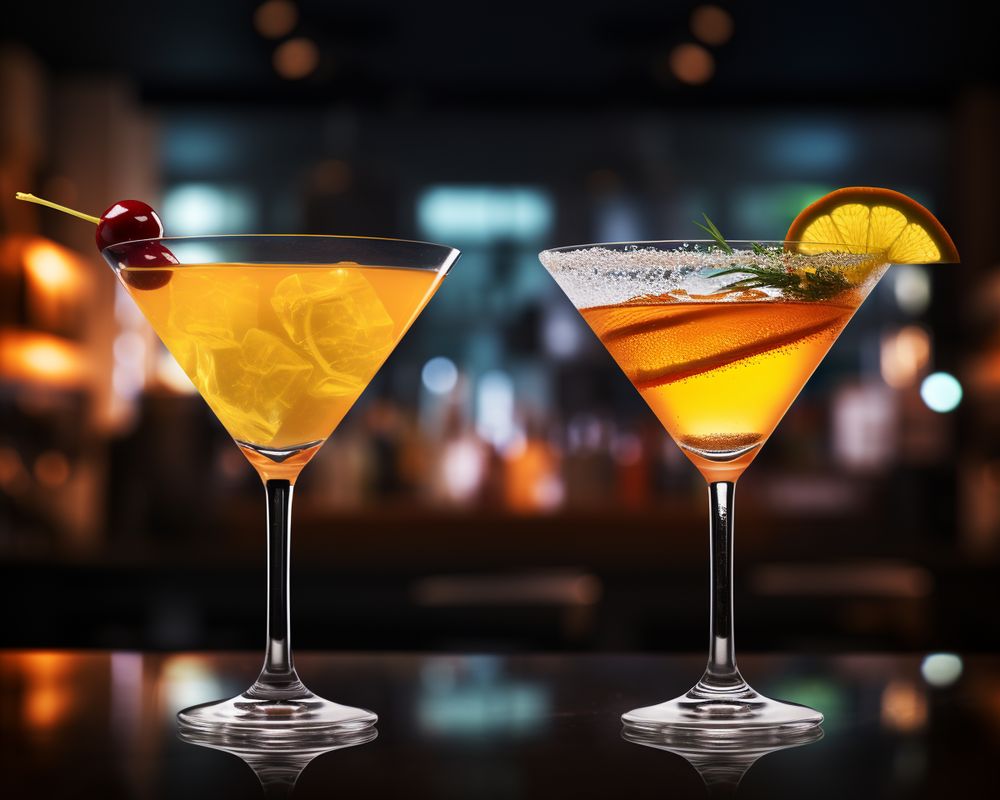
Mimosas have a vibrant orange color and are often garnished with a strawberry or an orange slice. Martinis have a clear, elegant look and are typically garnished with an olive or a lemon twist.
What is the Nutritional Information for Mimosas and Martinis?
A typical Mimosa contains around 75-80 calories per serving, mainly from the champagne and orange juice. A Martini, on the other hand, contains around 120-175 calories per serving, due to the higher alcohol content in gin and vermouth.
What is the Making Cost for Mimosas and Martinis?
A Mimosa’s cost depends on the quality of the champagne used. A Martini’s cost also varies based on the gin brand. However, typically, Martinis are more expensive to make than Mimosas due to the higher price of gin and vermouth.
What is the Alcohol Content (ABV Percentage) in Mimosas and Martinis?
A Mimosa has an average ABV of about 8-10%, depending on the champagne used. A Martini, however, is a stronger cocktail with an ABV ranging from 25-30%.
Unique Insight: While both cocktails are sophisticated and loved by many, Mimosas are often associated with brunch and daytime events due to their lighter, fruity profile and lower alcohol content. Martinis, being stronger and more robust, are typically enjoyed during evening occasions.