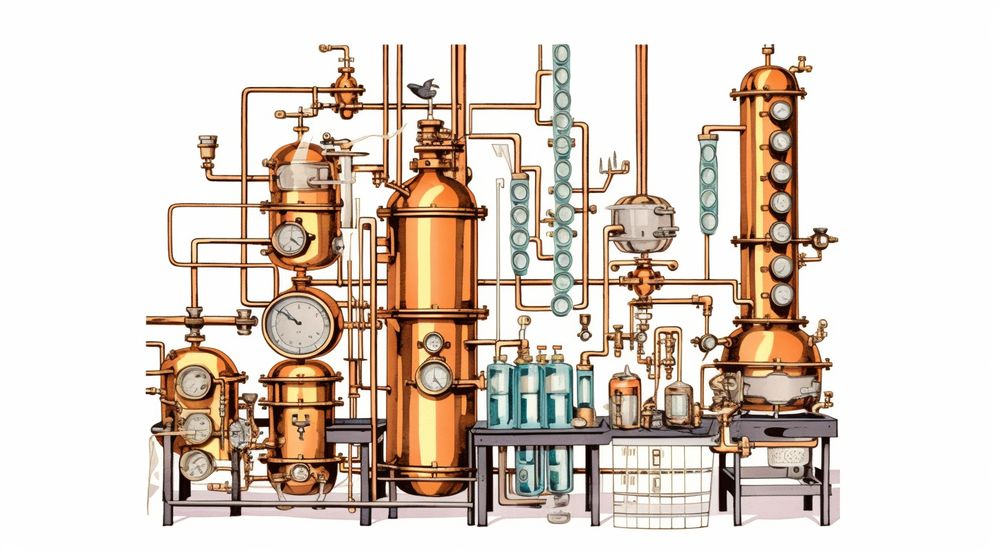
Introduction to Distillation: The Heart of Gin Production
The magical journey of gin begins with a process that’s as scientific as it is artistic.
The art of distillation is the raison d’être of gin’s unique character.
The process involves heating a fermented mixture, causing its components to vaporize and then condense, effectively purifying the spirit and amplifying its flavors.
Gin production utilizes this technique to infuse the base spirit with a symphony of botanicals, creating a drink that’s truly a feast for the senses.
The Fundamentals of Gin Distillation
The gin distillation process is a meticulously choreographed ballet of science and nature.
The process begins with the selection of a high-quality base spirit, often grain alcohol, which is then redistilled with a curated collection of botanicals.
The star of these botanicals and the essence of all gin is the juniper berry, which lends its piney, woody, peppery, citrusy, and menthol flavors to the spirit.
Mashing:
Grains, usually barley, corn, or rye, are mashed and mixed with water.
Fermentation:
Yeast is introduced to convert the sugars into alcohol, creating a ‘wash’.
First Distillation:
The wash is distilled, producing a ‘low wine’ with about 25–30% alcohol.
Second Distillation:
The low-proof wine is distilled again, often in a pot still, yielding a high-proof spirit.
Infusion with Botanicals:
The spirit is steeped with botanicals, primarily juniper, and redistilled.
Dilution:
The resultant spirit, now gin, is diluted with water to the desired strength.
The Role of Botanicals: The Symphony of Flavors in Gin
Gin’s unique charm lies in its symphony of botanicals, with the juniper berry leading the ensemble. This essential ingredient imparts the classic, piney flavor synonymous with gin.
The supporting cast, including coriander seeds, angelica root, citrus peels, and a plethora of others, add complexity and character, crafting the distinctive flavor profiles of different gins.
Each distiller’s choice of botanicals is a closely guarded secret, contributing to the gin’s distinctive identity.
Common Botanicals Used in Gin and Their Flavors
| Botanical | Flavor |
| Juniper Berries | Pine, sweet, and slightly tart |
| Coriander Seeds | Spicy, nutty, and slightly citrusy |
| Angelica Root | Earthy and slightly sweet |
| Citrus Peels | Bright and citrusy |
| Orris Root | Floral and slightly bitter |
| Cardamom | Spicy and slightly sweet |
| Cassia Bark | Sweet and spicy, similar to cinnamon |
Different Types of Distillation: The Techniques That Tailor Your Tipple
The gin distillation process can take several forms, with each method resulting in a distinct product.
The two primary methods are pot distillation and column distillation.
Pot distillation, the oldest method, involves heating the fermented mixture in a large pot and collecting the alcohol vapors as they condense.
On the other hand, column distillation, a more modern approach, uses a tall column to facilitate the separation of alcohol, allowing for a higher-proof spirit.
Non-Alcoholic Gin Distillation: The Art of Flavor without the Buzz
For non-alcoholic mocktail enthusiasts, non-alcoholic gin offers the complexity and depth of gin, minus the alcohol.
The production process is similar to that of traditional gin, with the key difference being the removal of alcohol at the end of the distillation process.
This is often achieved through careful distillation techniques that preserve the botanical flavors while eliminating the alcohol.
How Distillation Affects Flavor: The Science of Taste
The distillation process plays a crucial role in shaping the final flavor and quality of the gin.
Each step of the process, from the selection and treatment of botanicals to the distillation method and duration of infusion, can influence the flavor profile of the gin.
For instance, bruising certain botanicals before infusion can release more flavors, while the duration of infusion can determine the intensity of these flavors.
The Beauty of the Distillation Process
In essence, the distillation process is a dance between science and nature, resulting in a spirit that’s as complex as it is delightful.
Whether you’re a gin connoisseur or a casual enthusiast, understanding the distillation process offers a deeper appreciation of your favorite spirit and its journey from grain to glass.
A Comprehensive Guide to the Gin Distillation Process: Everything You’ve Asked!
What is the gin distillation process?
The gin distillation process is a method by which gin is produced from a base spirit through a process of re-distillation with botanicals, primarily juniper berries, which give gin its characteristic flavor.
The botanicals are steeped in the base spirit and then re-distilled to create a high-proof, aromatic spirit known as gin.
This process can be performed in different types of stills, like pot stills and column stills, and each method imparts unique qualities to the final product.
What are the ingredients used in gin distillation?
The primary ingredients used in the gin distillation process are a base spirit, usually neutral grain alcohol, and botanicals, most importantly, juniper berries.
Other botanicals used can include coriander seeds, angelica root, citrus peels, and a variety of other herbs and spices.
These botanicals give gin its complex flavor profile.
Why is juniper used in gin?
The name gin itself is derived from either the French “genièvre” or the Dutch “jenever”, both of which mean “juniper”.
The predominant flavor of gin is always juniper, and the ethanol in the distillation process draws many different oils out of the cells of juniper berries.
These include monoterpenes and sesquiterpenes, which give your drink that piney, woody, peppery, citrusy, and menthol taste.
The exact flavor molecules, and especially their proportions, vary between juniper species and where the juniper grows, affecting how the berries taste and smell.
Can I make gin at home?
Yes, it is possible to make gin at home without distillation through a process known as compounding.
This involves infusing a base spirit (like vodka) with botanicals, straining it, and then letting it rest.
However, this method will result in a product that’s slightly different from traditionally distilled gin.
It’s important to note that actual distillation of spirits at home is illegal in many places without the proper licenses and permits due to safety and taxation reasons.
Always check your local laws before attempting to distill spirits at home.
How does gin differ from vodka?
Gin and vodka start with the same base: a neutral grain spirit. The key difference is that gin is flavored with botanicals, with juniper being the most significant.
Vodka, on the other hand, is typically not flavored (though there are flavored vodkas on the market) and is often distilled multiple times to achieve a very pure, neutral spirit.
In essence, one could argue that gin is flavored vodka, but the complexity and variety of gin’s botanicals create a spirit that’s unique and distinct from its base.