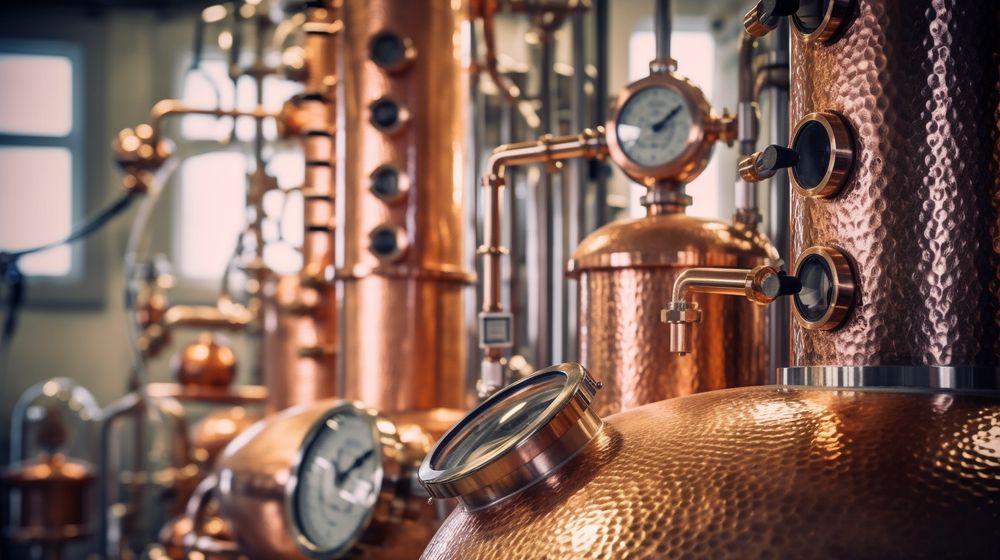
What are the distillation methods?
Distillation is the beating heart of any spirit, and gin is no exception.
This process, as age-old as civilization itself, holds the secret to the myriad flavors, aromas, and textures that grace our palates when we sip our favorite G&T or Negroni.
Let’s embark on a journey to understand the various distillation methods that gin brands employ, unveiling the enigmatic character of this beloved spirit.
Pot Still Distillation
The traditional method, where botanicals are steeped in neutral grain alcohol and then distilled.
Column Still Distillation
A more modern technology that allows for continuous distillation, producing a cleaner spirit.
Vacuum distillation
Is an innovative approach where distillation occurs at lower temperatures, preserving delicate botanical flavors.
Traditional Distillation vs. Contemporary Methods
While tradition has its charm, innovation is the spice of life. In the world of gin, the interplay between these two aspects is nothing short of fascinating.
Take Bombay Sapphire, for instance.
This brand utilizes a unique vapor Infusion process where botanicals are placed in perforated copper baskets and the alcohol vapors passing through them extract their flavors.
This results in a lighter, more aromatic gin.
On the other end of the spectrum, we have Hendrick’s Gin, which combines two different distillation methods: the pot still and the Carter-Head still.
This marriage of old and new imparts a beautifully balanced complexity to their gin.
Unique Botanicals in Distillation
Monkey 47
Nestled in the heart of Germany’s Black Forest, Monkey 47 is a gin that truly stands out from the crowd.
As the name suggests, it boasts a whopping 47 botanicals!
This gin brand’s unique distillation process involves three separate macerations, followed by wooden barrel aging.
Gin Mare
Gin Mare, a Mediterranean gin, brings together an eclectic mix of botanicals, including arbequina olives, basil, rosemary, and thyme.
These unique flavors are extracted through a delicate maceration and distillation process, resulting in a gin that truly captures the spirit of the Mediterranean.
Geographic Influence on Distillation
The Botanist
Hailing from the Scottish island of Islay, The Botanist incorporates 22 locally foraged botanicals.
The gin’s distillation process, carried out in a unique Lomond pot still, mirrors the wild essence of its homeland.
Ki No Bi Kyoto Dry Gin
Ki No Bi, the first gin to be made in Kyoto, Japan, uses botanicals grown in the surrounding region.
The distillation process is unique, with each botanical distilled separately before being blended together.
This results in a gin with a distinct, clean flavor profile that beautifully represents its origins.
Innovative DIY Distillation Techniques
Doghouse Distillery in London started as a home distillation project.
Today, they’re known for their grain-to-bottle approach, creating their base spirit from scratch rather than buying neutral grain spirits.
This unique distillation process gives their Renegade Gin a distinct, full-bodied flavor.
Non-Alcoholic Gins with Distinctive Production
In the realm of non-alcoholic gins, Seedlip shines.
They use a bespoke maceration, copper pot distillation, blending, and filtration process for each individual botanical.
The result is a flavorful non-alcoholic gin, perfect for the discerning mocktail enthusiast.
Future of Gin Distillation
Gin distillation is not just about the past and the present; it’s also about the future.
Brands like Empirical Spirits are experimenting with koji fermentation and low-temperature distillation, hinting at the exciting directions gin production could take.
The Importance of Distillation
When it comes to gin, distillation is more than a mere process; it’s an art. It shapes the spirit, molds its character, and breathes life into it.
From the traditional pot still to innovative vacuum distillation, every technique imparts its own unique touch.
So the next time you pour yourself a glass of gin, remember that you’re not just tasting a spirit; you’re savoring centuries of innovation and tradition.
We’ve highlighted a few unique gin brands and their distillation processes. Here is a handy table summarizing our gin journey:
| Brand | Distillation Technique | Unique Botanicals | Geographic Influence |
| Bombay Sapphire | Vapour Infusion | Juniper, Lemon Peel, Coriander, and Angelica | Laverstoke Mill, England |
| Hendrick’s Gin | Pot and Carter-Head are still | Rose, Cucumber, and juniper | Girvan, Scotland |
| Monkey 47 | Three separate macerations, Wooden barrel aging | 47 botanicals, including Lingonberries, Blackberries, and Hawthorn Berries | Black Forest, Germany |
| Gin Mare | Maceration and Distillation | Arbequina Olives, Basil, Rosemary, and thyme | Barcelona, Spain |
| The Botanist | Lomond Pot-still | 22 locally foraged botanicals | Islay, Scotland |
| Ki No Bi Kyoto Dry Gin | Separate distillation for each botanical | Yuzu, Sansho Pepper, and Ume | Kyoto, Japan |
| Doghouse Distillery’s Renegade Gin | Grain-to-bottle approach | Juniper, Coriander, Angelica Root, and orris root | London, England |
| Seedlip (Non-Alcoholic) | Bespoke maceration, Copper pot distillation, blending, and filtration | Pea, Hay, Spearmint, Rosemary, and Thyme | London, England |
| Empirical Spirits | Koji Fermentation, Low-temperature distillation | – | Copenhagen, Denmark |
Remember, the magic of gin lies not just in the botanicals but also in the unique distillation processes each brand employs.
Unlocking the Secrets of Gin Distillation: An In-Depth FAQ Guide
How many times can you distill gin?
Gin can typically be distilled up to twice during the production process.
What are the basics of distilling gin?
Creating a grain-based mash, fermenting the mash, straining the liquid ethanol from the solids, distilling the liquid (which can occur multiple times), adding water to dilute the product to the desired ABV, and finally bottling the gin are all steps in the distillation process.
How long does gin distillation take?
The gin distillation process, including the fermentation stage, usually lasts between one and two weeks.
What are the three types of gin distillation?
The three main types of gin distillation are Pot Distillation, Column Distillation, and Compound (or Bathtub) Gin.
Pot-distilled gin is a method used for thousands of years and often results in a gin with a strong, rich flavor.
The details of Column Distillation and Compound Gin could not be fully sourced due to technical difficulties, but Compound Gin is known to be a simpler method where the botanicals are steeped in the spirit without a secondary distillation.
When should you stop a distilling run?
A distilling run is typically stopped when the ethanol content drops below 60%.
The specifics of when to stop a distilling run can vary based on the method of distillation used and the specific taste profile the distiller is aiming to achieve.
How long after distilling can you drink gin?
Gin is typically ready to drink immediately after it is distilled.
Please keep in mind that the specifics of the distillation process can vary greatly depending on the type of gin produced and the distiller’s techniques.