Daiquiri vs Pina Colada: A Taste Profile Showdown
Basic Tastes
- Daiquiri: Predominantly sweet and sour, thanks to the combination of lime juice and simple syrup.
- Pina Colada: A delightful mix of sweet and umami, with the sweetness of pineapple juice and the creamy coconut milk offering a hint of umami.
Other Taste Profile Factors
- Daiquiri: The texture is smooth and the temperature typically chilled. The aftertaste leaves a lingering citrus note.
- Pina Colada: Creamy in texture, served cold with a tropical aroma and a sweet aftertaste.
Considerations
- Daiquiri: A well-balanced cocktail with a simple yet intense flavor profile. The contrast between the sour lime and sweet syrup creates harmony.
- Pina Colada: It’s a complex cocktail with a harmonious blend of sweet, creamy, and tropical flavors. The intensity of the pineapple and coconut contrast beautifully.
💡 While both cocktails are tropical delights, the Daiquiri offers a more intense, contrasting taste experience, whereas the Pina Colada provides a harmonious, complex flavor journey.
Daiquiri vs Pina Colada: A Deep Dive into Barware and Glassware
Mixing & Preparation
When it comes to mixing up a classic Daiquiri or a tropical Pina Colada, your barware arsenal should include a Cocktail Shaker, Mixing Glass, Bar Spoon, and a Jigger. A Muddler is essential for a Daiquiri to crush the lime and sugar, while an Ice Crusher is vital for the Pina Colada to achieve that smooth, icy consistency. Ice Molds can add a fun twist to either cocktail.
Serving & Presentation
A Daiquiri is traditionally served in a Cocktail Glass, while the Pina Colada shines in a Highball Glass. A Glass Rimmer can be used for both, adding a sweet or salty edge to your cocktail. Garnish Tray and Coasters are essential for presentation and preventing any mess on your bar.
Storage & Organization
Keeping your bar organized is key. An Ice Bucket & Tongs, Bottle Opener & Corkscrew, Speed Pourers, and Liquor Pour Spouts make mixing and serving your cocktails efficient. A Bar Mat, Bar Roll, or Tool Bag can help keep your tools in place and your bar tidy.
Garnishing & Fine Detailing
For the perfect finishing touch to your Daiquiri or Pina Colada, a Cutting Board & Knife, Peeler & Zester, and Channel Knife are crucial. A Citrus Juicer can extract fresh lime juice for the Daiquiri, while an Atomizer can spritz a hint of rum over your Pina Colada. A Bitters Bottle adds complexity to either cocktail.
Preservation & Enhancement
For longer-lasting freshness, a Champagne Stopper, Wine Aerator, Decanter, and Wine Preserver can help. These tools ensure your ingredients maintain their quality, enhancing the overall taste of your cocktails.
💡 Remember, the right barware and glassware can make or break your cocktail experience. For the Daiquiri, the muddler and citrus juicer are key to unlocking its citrusy kick. For the Pina Colada, the ice crusher is crucial to achieve its signature slushy texture. So, equip your bar with the right tools and enjoy the art of cocktail making!
Cocktails Versatility: Daiquiri vs Pina Colada
Occasion Pairing
- Daiquiri: Perfect for sophisticated events like Corporate Parties, Art Galas, and Award Ceremonies. It’s also a great choice for a romantic Date Night or a classy Bachelor/Bachelorette Party.
- Pina Colada: Ideal for casual and fun events like Beach Days, Birthday Parties, Themed Parties, and Music Festivals. It’s also a top pick for a Girls’ Night Out or a lively Housewarming Party.
Season Pairing
- Daiquiri: A refreshing choice for Summer and Spring, thanks to its citrusy flavor profile that complements the warm weather.
- Pina Colada: Best enjoyed in Summer and Autumn, as its tropical taste pairs well with hot weather and early fall vibes.
Event Pairing
| Daiquiri | Pina Colada |
|---|---|
| Weddings, Corporate Parties, Art Galas | Beach Parties, Music Festivals, Themed Parties |
| Award Ceremonies, Retirement Parties | Birthday Parties, Product Launches, Housewarming |
💡 While both cocktails are versatile, the Daiquiri tends to be associated with elegance and sophistication, making it a better choice for formal events. On the other hand, the Pina Colada, with its tropical vibe, is more suited for casual, fun-filled occasions. So, the choice between the two largely depends on the mood and theme of your event.
Daiquiri vs Pina Colada: Ingredient Accessibility
Daiquiri Ingredients
- White rum
- Lime juice
- Simple syrup
Pina Colada Ingredients
- White rum
- Pineapple juice
- Cream of coconut
Ingredient Accessibility
Most of the ingredients for both cocktails are readily available in local grocery stores. However, some may be more difficult to find depending on your location.For the Daiquiri, white rum, lime juice, and simple syrup are common and easy to source. Simple syrup can even be made at home with sugar and water.The Pina Colada also requires white rum, which is easily accessible. Pineapple juice is also common, but cream of coconut may be harder to find in some areas. It’s worth noting that cream of coconut is not the same as coconut milk or coconut cream, so make sure to get the right ingredient.
Verdict
While both cocktails have accessible ingredients, the Daiquiri may be slightly easier to gather due to the simplicity of its components. The Pina Colada’s cream of coconut may require a bit more effort to source.
💡 Remember, the quality of your ingredients can significantly affect the taste of your cocktail. So, even though these ingredients are easy to find, it’s worth investing in high-quality products for the best cocktail experience.
Daiquiri vs Pina Colada: A Dive into Cocktail Variations
The Classic Daiquiri
The Classic Daiquiri, a high-ranking cocktail, is a simple blend of rum, fresh lime juice, and sugar. It’s light, tart, and refreshing, making it a favorite among cocktail enthusiasts.
Strawberry Daiquiri
A medium-ranked variation, the Strawberry Daiquiri, adds a fruity twist to the classic. The addition of fresh strawberries gives it a sweet and summery flavor profile.
Hemingway Daiquiri
A long-tail keyword favorite, the Hemingway Daiquiri, named after the famous writer Ernest Hemingway, introduces grapefruit juice and maraschino liqueur to the classic recipe, offering a complex and intriguing taste.
The Classic Pina Colada
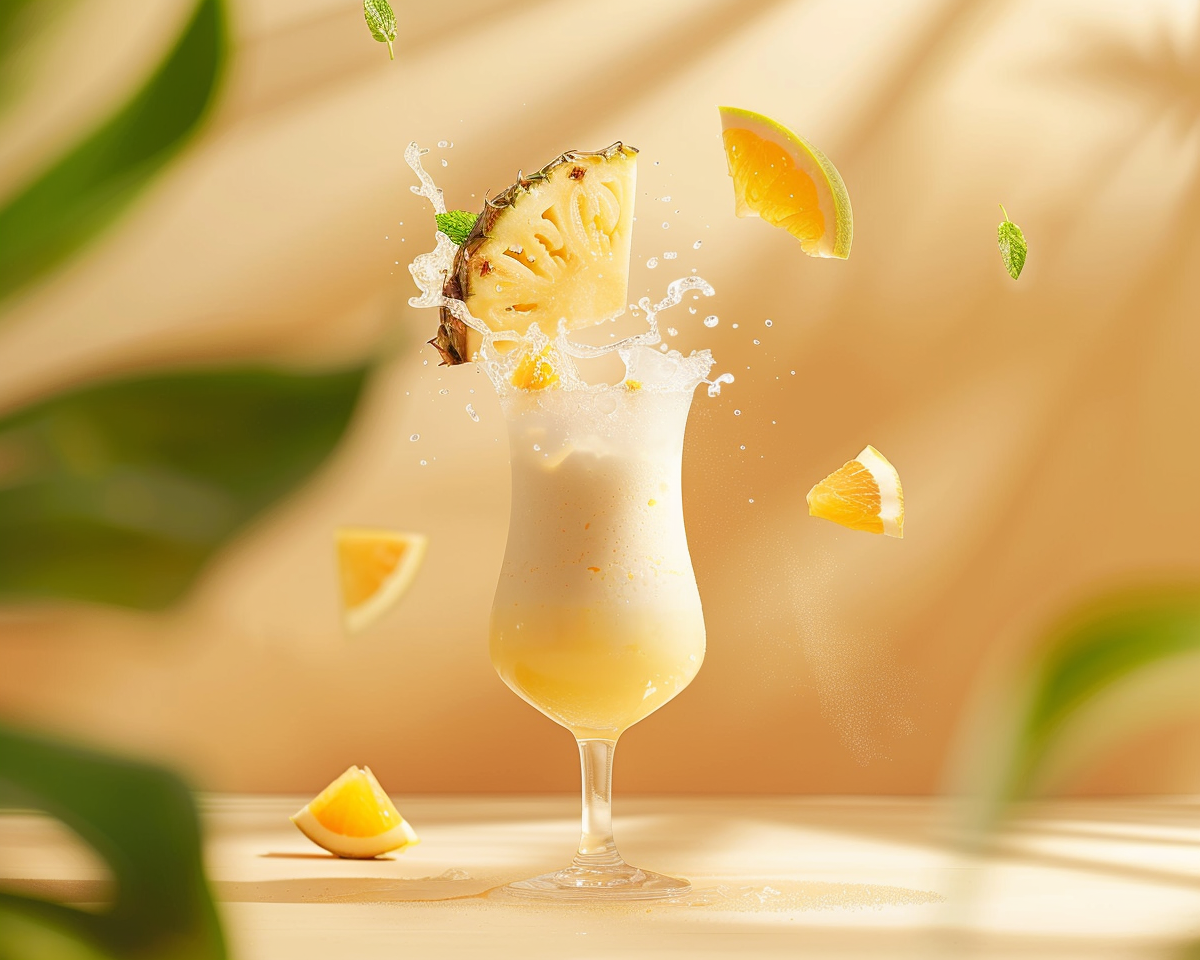
Highly-ranked among tropical cocktails, the Classic Pina Colada is a creamy blend of rum, coconut cream, and pineapple juice. This cocktail transports you straight to the beach with its tropical flavors.
Blue Pina Colada
A medium-ranked variation, the Blue Pina Colada, adds blue curacao to the mix, giving the cocktail a vibrant color and a slightly citrusy flavor.
Virgin Pina Colada
A popular long-tail keyword, the Virgin Pina Colada, omits the rum for a non-alcoholic version that still delivers the tropical taste of the original.
| Daiquiri | Pina Colada |
|---|---|
| Light and tart | Creamy and tropical |
| Typically served in a cocktail glass | Often served in a hurricane glass |
💡 While both cocktails originate from the Caribbean and prominently feature rum, the Daiquiri is typically more tart and refreshing, while the Pina Colada is creamier and sweeter. The choice between the two often comes down to personal preference for texture and flavor.
Comparing the Cost of Daiquiri and Pina Colada
Daiquiri: A Wallet-Friendly Option
- Rum: Bacardi Superior – $15
- Lime Juice: Freshly Squeezed – $1
- Sugar Syrup: Homemade – $1
The total cost of making a Daiquiri at home is approximately $17.
Pina Colada: A Slightly Pricier Indulgence
- Rum: Malibu Coconut – $20
- Pineapple Juice: Dole – $3
- Cream of Coconut: Coco Lopez – $4
The total cost of making a Pina Colada at home is approximately $27.
Upgrading Your Cocktail Experience
If you’re looking to elevate your cocktail game, consider these higher-end brands:- Rum for Daiquiri: Havana Club Añejo 3 Year Old – $25
- Rum for Pina Colada: Kōloa Kauaʻi Coconut Rum – $35
Remember, the quality of your ingredients can significantly impact the taste of your cocktail.
💡 While the Daiquiri is more cost-effective, the Pina Colada, with its tropical flavors and creamy texture, offers a more luxurious experience which justifies its slightly higher cost.
Prep & Mix Time: Daiquiri vs Pina Colada
Total Preparation Time
- Daiquiri: 5 minutes
- Pina Colada: 10 minutes
Mixing Time
- Daiquiri: 2 minutes
- Pina Colada: 5 minutes
Complexity of Preparation
- Daiquiri: Easy
- Pina Colada: Medium
Ingredient Preparation
Daiquiri ingredients are simple and easily accessible, requiring just rum, lime juice, and sugar. Pina Colada, on the other hand, requires a more diverse set of ingredients including rum, cream of coconut, pineapple juice, and fresh pineapple for garnish.
Mixing Techniques
- Daiquiri: Shake and strain
- Pina Colada: Blend until smooth
Presentation, Set up, Cleanup
Both cocktails are served in a chilled glass, but the Pina Colada often comes with a pineapple slice and cherry garnish. The cleanup for Daiquiri is straightforward, whereas the Pina Colada requires cleaning the blender.
Waiting Time
- Daiquiri: No waiting time
- Pina Colada: Chill time of 2-3 minutes
Expert Tips
For the best Daiquiri, use fresh lime juice and quality rum. For the Pina Colada, ensure to blend until it’s creamy and smooth, without any ice chunks.
💡 While both are rum-based cocktails, the Daiquiri is quicker and simpler to prepare, making it a perfect choice for beginners or when time is limited. The Pina Colada, though slightly more complex, offers a creamy, tropical experience that’s worth the extra effort.
Mixology Hacks for the Perfect Blend: Daiquiri vs Pina Colada
Muddling Right
For a Daiquiri, muddling isn’t necessary. But for a Pina Colada, muddling fresh pineapple chunks can elevate the flavor profile.
Ice Matters
Both cocktails demand crushed ice for a smooth, chilled blend. Remember, smaller ice pieces melt faster, diluting the drink.
Shake vs Stir
Shaking is the key for both cocktails. It helps mix the ingredients well and also chills the drink efficiently.
Balancing Act
For a Daiquiri, balance the tart lime juice with sweet rum and sugar. In a Pina Colada, the sweet pineapple juice and coconut cream need to harmonize with the rum.
Herb Infusion
While not traditional, a hint of mint or basil can add a refreshing twist to both cocktails.
Aromatic Bitters
A dash of bitters can add depth to a Daiquiri. However, it’s not recommended for a Pina Colada as it can overpower the tropical flavors.
Smoke Effects
Smoky flavors aren’t typically associated with these tropical drinks. But a touch of smoked rum could add an exciting twist to a Daiquiri.
Double Straining
Double straining is essential for a Daiquiri to remove any leftover fruit pulp. For a Pina Colada, it ensures a smooth texture, free from pineapple fibers.
Perfect Presentation
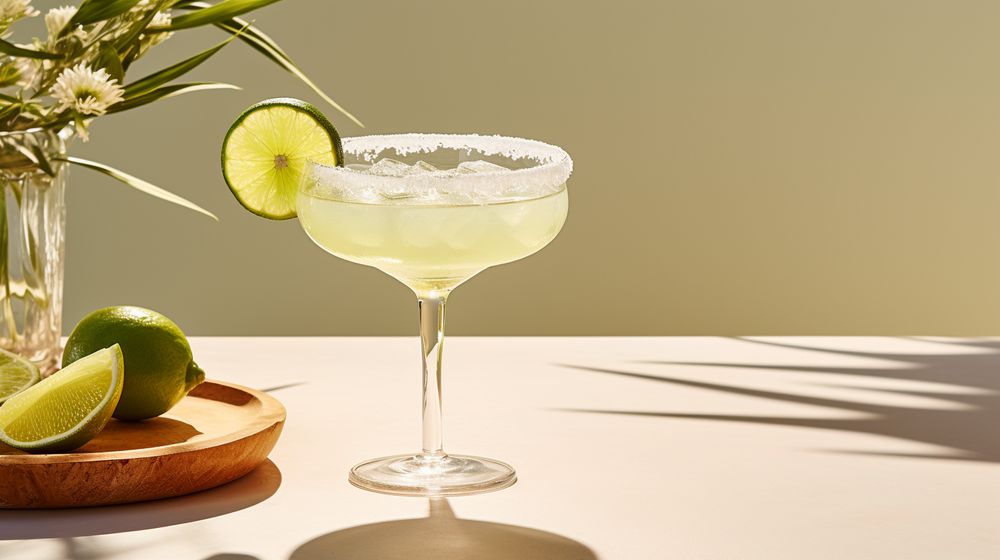
A Daiquiri looks elegant in a coupe glass, while a Pina Colada shines in a tall, curved hurricane glass.
Garnish Game
Adorn your Daiquiri with a lime wheel. For the Pina Colada, opt for a classic pineapple wedge and cherry.
Temperature
Both cocktails should be served ice-cold. This not only enhances the flavors but also provides a refreshing experience.
Crafting Signature Cocktails at Home
Experiment with different rums, adjust the sweetness or tartness, and play around with garnishes. Your home bar, your rules!
Mixology Techniques for Beginners
Start with measuring correctly, then move onto shaking and straining. Practice makes perfect!
How to Balance Flavors in a Cocktail
Understand the flavor profiles of your ingredients. Aim for a balance between sweet, sour, and alcohol.
Clarified Cocktails
Not applicable for Daiquiri or Pina Colada as these cocktails are best enjoyed with their natural, vibrant colors.
Dehydrated Garnish
Dehydrated lime or pineapple wheels can add a fun twist to the garnish game.
Freeze & Squeeze
Freezing and squeezing fresh lime for Daiquiri or pineapple for Pina Colada can intensify the fruit flavors.
💡 The secret to the perfect Daiquiri or Pina Colada lies not just in the ingredients, but in the technique. Mastering the art of balance, presentation, and understanding your palate can take your cocktail from good to great.
Daiquiri vs Pina Colada: A Dive into Alcohol Content
Daiquiri: A Potent Classic
The Daiquiri, a timeless cocktail, typically boasts an alcohol content of approximately 13-20% ABV (Alcohol by Volume). This is primarily due to the use of high-proof rum as its main ingredient. For those seeking an alcohol-free alternative, the Virgin Daiquiri, also known as the Strawberry Daiquiri Mocktail, is a delightful choice. It maintains the same refreshing taste without the rum.
Pina Colada: A Tropical Treat
Meanwhile, the Pina Colada, a tropical favorite, contains a slightly lower alcohol content, typically around 11-13% ABV. This is due to the combination of rum, cream of coconut, and pineapple juice. For a non-alcoholic version, the Virgin Pina Colada swaps out the rum for more pineapple juice, ensuring the same creamy, tropical taste.
| Daiquiri | Pina Colada |
|---|---|
| 13-20% ABV | 11-13% ABV |
| Virgin Daiquiri (Alcohol-free) | Virgin Pina Colada (Alcohol-free) |
💡 Both cocktails can be enjoyed with or without alcohol, making them versatile choices for any occasion. However, it’s worth noting that the Daiquiri generally packs a stronger punch in terms of alcohol content. So, if you’re looking for a lighter option, the Pina Colada might be your best bet.
Nutritional Information: Daiquiri vs Pina Colada
Caloric Intake
A Daiquiri typically contains 112 calories, while a Pina Colada can pack a whopping 490 calories due to its cream and coconut milk content.
Spirits and Mixers
Both cocktails feature rum as their primary spirit. Daiquiris are mixed with lime juice and sugar, while Pina Coladas blend rum with pineapple juice and cream of coconut.
Sugar Content and Simple Syrups
Daiquiris contain around 6g of sugar, mostly from the simple syrup. Pina Coladas, however, can contain up to 60g of sugar, largely due to the coconut cream and pineapple juice.
Pre-mixed Cocktails and Carbohydrates
Pre-mixed Daiquiris and Pina Coladas can vary in carbohydrate content. A Daiquiri typically has 4g of carbs, and a Pina Colada can have up to 32g.
Beer, Wine, and Fruit Juices
Neither cocktail contains beer or wine. Daiquiris use lime juice, while Pina Coladas use pineapple juice and coconut cream.
Proteins, Fats, and Cream-based Cocktails
Daiquiris have negligible protein and fat content. Pina Coladas, being a cream-based cocktail, contain around 2g of protein and 17g of fat.
Egg Whites, Vitamins, and Minerals
Neither cocktail typically contains egg whites. Pina Coladas offer more vitamins and minerals due to the pineapple juice and coconut cream.
Citrus Fruits and Herbs
Daiquiris incorporate citrus in the form of lime juice. Neither cocktail traditionally includes herbs.
Allergens, Nuts, and Gluten
Those with nut allergies should be cautious of Pina Coladas due to the coconut content. Both cocktails are naturally gluten-free.
Other Factors: Caffeine and Sodium
Neither cocktail contains caffeine. Sodium content is negligible in both, but can increase if a pre-mixed version is used.
Low-Calorie and Sugar-Free Options
For a lower-calorie option, opt for a Daiquiri. A sugar-free Daiquiri or Pina Colada can be made by using a sugar substitute in the simple syrup.
Gluten-Free Alcoholic Beverages
Both Daiquiris and Pina Coladas are gluten-free, making them suitable for those with gluten intolerance or celiac disease.
💡 While both cocktails offer tropical flavors, the Daiquiri is a lighter choice in terms of calories, sugar, and fat content. However, the Pina Colada provides more vitamins and minerals due to its fruit content.
High Quality Facts: Daiquiri vs Pina Colada
Fact #1: Origin
The Daiquiri hails from Cuba, invented in the early 20th century, while the Pina Colada is a Puerto Rican invention from the 1950s. Both cocktails are a testament to the rich and vibrant culture of the Caribbean.
Fact #2: Key Ingredients
Daiquiri: Rum, lime juice, and sugar
Pina Colada: Rum, coconut cream, and pineapple juice
Fact #3: Taste Profile
The Daiquiri offers a tart and refreshing flavor, whereas the Pina Colada is known for its sweet and creamy taste.
Fact #4: Preparation
| Daiquiri | Pina Colada |
|---|---|
| Shaken and served straight up | Blended with ice and served with a pineapple wedge and cherry |
Fact #5: Popularity
While both cocktails are globally recognized, the Pina Colada enjoys a wider popularity due to its tropical vibe and sweet flavor, making it a favorite among beach-goers and party-goers alike.
💡 The Daiquiri, despite being less popular, is often considered a true connoisseur’s cocktail due to its simplicity and balance of flavors. This makes it a favorite among bartenders and cocktail enthusiasts.
FAQ: Unraveling the Mysteries of Daiquiri and Pina Colada
What are the main ingredients of a Daiquiri and a Pina Colada?
A traditional Daiquiri consists of white rum, lime juice, and sugar. On the other hand, a Pina Colada is made with white rum, coconut cream, and pineapple juice. Both cocktails are rum-based but differ significantly in their additional ingredients, providing unique taste profiles.
How are these cocktails prepared?
Both cocktails are typically blended with ice to create a refreshing, cold beverage. A Daiquiri is shaken with ice and strained into a cocktail glass, while a Pina Colada is often blended with crushed ice to achieve a slushy consistency.
Which alcohol brands are best suited for these cocktails?
For a Daiquiri, brands like Bacardi Superior or Havana Club Anejo Blanco are excellent choices. For a Pina Colada, you might opt for Malibu Rum or Don Q Coco Rum for their coconut notes.
What barware and glassware are required?
For a Daiquiri, you’ll need a shaker and a cocktail glass, while a Pina Colada calls for a blender and a hurricane glass for serving.
What are the best food pairings?
Daiquiris pair well with seafood dishes, particularly shrimp and fish tacos, while Pina Coladas complement tropical and spicy foods, such as grilled pineapple and jerk chicken.
How are these cocktails visually presented?
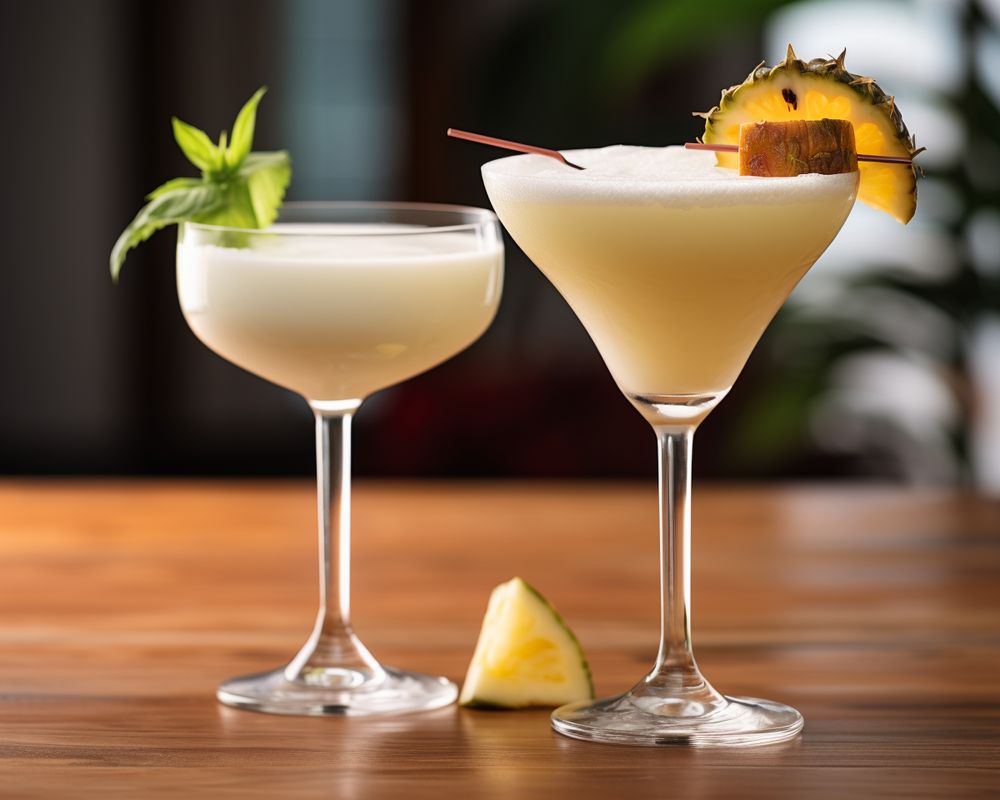
Daiquiris are typically served in a cocktail glass with a lime wheel garnish, while Pina Coladas are presented in a hurricane glass, often adorned with a pineapple wedge and a maraschino cherry.
What is the nutritional information for these cocktails?
A standard Daiquiri contains around 130 calories and has no allergens. A Pina Colada, however, is more indulgent with around 490 calories, and it contains potential allergens like coconut.
What is the cost of making these cocktails?
The cost varies depending on the rum brand and quality of other ingredients. However, a Daiquiri is generally less expensive to make than a Pina Colada due to fewer and simpler ingredients.
What is the alcohol content (ABV percentage) of these cocktails?
Both cocktails have a similar alcohol content, averaging around 13-15% ABV, depending on the amount of rum used.
Unique Insight: While both Daiquiri and Pina Colada are rum-based cocktails, they offer vastly different experiences. The Daiquiri, with its simple ingredients and tart flavor, is a classic cocktail that highlights the rum. In contrast, the Pina Colada, with its tropical flavors and creamy texture, offers a more indulgent, vacation-like experience.