Bloody Mary vs Negroni: A Deep Dive into the Taste Profile
Basic Tastes
- Bloody Mary: This cocktail primarily presents a balance of salty, umami, and spicy tastes, with a hint of sourness from the lemon or lime juice.
- Negroni: Negroni strives for a harmony of sweet and bitter notes, with the sweetness of the vermouth contrasted by the bitterness of the Campari.
Other Taste Profile Factors
- Bloody Mary: Thick and viscous in texture, Bloody Mary is often served chilled. It carries a strong aroma of tomato and celery, leaving a spicy aftertaste.
- Negroni: Negroni has a smoother texture and is typically served at room temperature. Its aroma is more citrusy and herbal, with a lingering bitter aftertaste.
Considerations
- Bloody Mary: The complexity of a Bloody Mary lies in the layers of its flavor, from the initial salty-tomato taste to the final spicy kick. Its intensity can be adjusted with the amount of hot sauce added.
- Negroni: The Negroni is a simpler cocktail, focusing on the contrast between sweet and bitter. The intensity of its taste is determined by the balance of its three ingredients: gin, vermouth, and Campari.
💡 Despite their contrasting taste profiles, both Bloody Mary and Negroni share a common trait – they are both ‘savoury’ cocktails. While Bloody Mary achieves this through the use of tomato juice and spices, Negroni does so through the bitter Campari. This makes them unique in a world of predominantly sweet cocktails.
Bloody Mary vs Negroni: Barware and Glassware
Mixing & Preparation
Both Bloody Mary and Negroni require the use of a cocktail shaker and a bar spoon for proper mixing. For the Bloody Mary, a muddler is often used to enhance the flavors of the celery, while the Negroni does not require a muddler. Both cocktails use a jigger for precise measurements. Ice is crucial in both drinks, with the use of an ice crusher or ice molds being preferred.
Serving & Presentation
The Bloody Mary is traditionally served in a highball glass to accommodate the volume of the drink and its garnishes. On the other hand, the Negroni is typically presented in a lowball glass or a cocktail glass to showcase its vibrant color. Garnishes for the Bloody Mary and Negroni are held in a garnish tray, and both are served with coasters.
Storage & Organization
Both cocktails necessitate the use of an ice bucket & tongs, speed pourers, and liquor pour spouts. The Bloody Mary’s ingredients can be neatly organized in a bar roll or tool bag, while the Negroni’s straightforward recipe means less organization is needed.
Garnishing & Fine Detailing
The Bloody Mary’s garnishing process is more complex, requiring cutting boards, knives, peelers, and a citrus juicer for the lemon wedge. The Negroni, with its simple orange peel garnish, requires just a channel knife and peeler.
Preservation & Enhancement
Neither cocktail requires the use of a champagne stopper, wine aerator, or decanter. However, a wine preserver could be used for the vermouth in the Negroni to ensure its freshness for future use.
💡 While both cocktails require similar barware, the Bloody Mary’s more elaborate recipe and presentation means it needs a wider range of tools for garnishing and fine detailing.
Bloody Mary vs Negroni: A Cocktail Versatility Showdown
Occasions that Call for a Bloody Mary
- Date Night
- Brunch
- Beach Day
- Housewarming Parties
- New Year’s Day
Negroni’s Ideal Moments
- Art Galas
- Corporate Parties
- Product Launches
- Road Trips
- Summer Barbecues
Bloody Mary’s Seasonal Appeal
With its bold and spicy flavors, the Bloody Mary has a certain warmth that makes it a perfect match for the chillier seasons like Autumn and Winter.
Negroni: A Cocktail for all Seasons?
Its balance of sweet and bitter flavors allows the Negroni to be enjoyed year-round, from the blooming freshness of Spring to the crisp evenings of Winter.
| Bloody Mary | Negroni |
|---|---|
| Brunch, New Year’s Day, Winter | Summer Barbecues, Corporate Parties, Year-round |
Events: The Winner Takes it All
While the Bloody Mary reigns supreme at more casual events like beach days and brunches, the Negroni holds its own at more formal occasions like art galas and corporate parties.
💡 A unique insight? The Bloody Mary’s versatility shines in its ability to be customized with various garnishes, making it a standout choice for events where personalization is key – think weddings or birthdays!
Bloody Mary vs Negroni: Ingredient Accessibility
Bloody Mary Ingredients
- Vodka
- Tomato juice
- Lemon juice
- Worcestershire sauce
- Tabasco sauce
- Salt and Pepper
- Celery stalk and lemon slice (for garnish)
Negroni Ingredients
- Gin
- Sweet vermouth
- Campari
- Orange peel (for garnish)
Availability and Gathering
Both cocktails require a base spirit: vodka for Bloody Mary and gin for Negroni. These are commonly available in most liquor stores. The other ingredients for both cocktails are also quite accessible, with the possible exception of Campari for the Negroni, which may not be stocked in smaller stores.
| Bloody Mary | Negroni |
|---|---|
| Most ingredients readily available in standard supermarkets. | Campari may require a trip to a specialist liquor store. |
💡 The Bloody Mary, with its less exotic ingredient list, is the more accessible cocktail to make for first-time cocktail enthusiasts or those in locations with limited liquor selections.
Breaking Down Bloody Mary and Negroni Variations
Bloody Mary Variations
- Classic Bloody Mary: A savory cocktail made from vodka, tomato juice, and various spices and flavorings including Worcestershire sauce, hot sauces, garlic, herbs, horseradish, celery, olive, salt, black pepper, lemon juice, lime juice and celery salt.
- Red Snapper: A gin-based version of the Bloody Mary, adding a botanical twist to the classic.
- Michelada: This Mexican cocktail variation swaps vodka for beer, and introduces spicy flavors and a tangy twist.
Negroni Variations
- Classic Negroni: A popular Italian cocktail, made of one part gin, one part vermouth rosso, and one part Campari, garnished with orange peel.
- Negroni Sbagliato: This “mistaken” Negroni replaces gin with sparkling wine for a lighter, bubblier version.
- Boulevardier: A whisky-based twist on the Negroni, the Boulevardier is perfect for bourbon lovers who enjoy a bitter edge.
Tasty Versions
For a tasty version of the Bloody Mary, try adding a dash of pickle juice and garnishing with a dill pickle spear. For the Negroni, add a splash of orange juice for a citrusy kick that compliments the bitter Campari.
💡 Did you know that the Bloody Mary is often considered a “hangover cure” due to its combination of tomato juice (for rehydration) and vodka (for, well, hair of the dog)? On the other hand, the Negroni, with its robust and bitter flavor profile, is often enjoyed as an aperitif to stimulate the appetite before a meal.
Bloody Mary vs Negroni: A Cost Analysis
Cost of Making a Bloody Mary
For cocktail enthusiasts, the Bloody Mary is an affordable choice. You can make a good Bloody Mary with budget-friendly ingredients:
- Vodka: Smirnoff ($15)
- Tomato Juice: Campbell’s ($2)
- Worcestershire Sauce: Lea & Perrins ($3)
Upgrading your Bloody Mary with premium ingredients can add to the price:
- Vodka: Grey Goose ($45)
- Tomato Juice: R.W. Knudsen ($4)
- Worcestershire Sauce: Annie’s ($4)
Cost of Making a Negroni
For those new to cocktail making, a Negroni can be a bit more expensive. This is mainly due to its three distinct spirits:
- Gin: Gordon’s ($15)
- Red Vermouth: Martini & Rossi ($8)
- Campari: ($30)
Opting for higher-end brands will significantly raise the cost:
- Gin: Hendrick’s ($40)
- Red Vermouth: Carpano Antica ($30)
- Campari: ($30)
💡 In terms of cost, a Bloody Mary is generally more affordable to make, especially if you’re sticking to budget-friendly brands. The Negroni, while pricier, offers a more complex flavor profile due to its blend of three spirits.
Bloody Mary vs Negroni: Prep & Mix Time
Bloody Mary
Total Preparation: 5 minutes
Mixing Time: 2 minutes
Complexity of Preparation: Medium
Ingredient Preparation: Chop celery, squeeze lemon
Mixing Techniques: Stirring
Presentation: Highball glass with celery stalk and lemon wheel
Setup: Easy
Cleanup: Easy
Waiting Time: None
Expert Tips: Chill your ingredients and highball glass beforehand for a refreshing drink.
Negroni
Total Preparation: 4 minutes
Mixing Time: 2 minutes
Complexity of Preparation: Easy
Ingredient Preparation: Slice orange
Mixing Techniques: Stirring
Presentation: Old fashioned glass with orange slice
Setup: Easy
Cleanup: Easy
Waiting Time: None
Expert Tips: Use a high-quality gin for the best tasting Negroni.
| Bloody Mary | Negroni |
|---|---|
| Complexity: Medium | Complexity: Easy |
| Setup: Easy | Setup: Easy |
| Cleanup: Easy | Cleanup: Easy |
💡 While the Bloody Mary might require a bit more in terms of ingredient preparation, both cocktails have a similar prep and mix time. However, the Bloody Mary offers a bit more complexity in its preparation, which can be an attractive feature for those who enjoy the art of cocktail making.
Mixology Hacks for the Perfect Blend: Bloody Mary vs Negroni
Muddling Right
- Bloody Mary: Muddle celery with a pinch of salt to boost flavor.
- Negroni: No muddling required. Let the spirits do the talking.
Ice Matters
Bloody Mary: Use larger ice cubes to prevent over-dilution.
Negroni: Regular cubed ice works well.
Shake vs Stir
Bloody Mary: Shake it up! This emulsifies the tomato juice.
Negroni: Stirred, not shaken. Keep the clarity of your cocktail.
Balancing Act
- Bloody Mary: Balance the tangy tomato with spicy Tabasco and a dash of lemon.
- Negroni: Perfect harmony comes from equal parts gin, vermouth, and Campari.
Herb Infusion
- Bloody Mary: Infuse vodka with horseradish for an extra kick.
- Negroni: Infused gin brings an extra layer of complexity.
Aromatic Bitters
Bloody Mary: Not typically used.
Negroni: A couple of dashes of orange bitters can brighten up the cocktail.
Smoke Effects, Double Straining, Perfect Presentation
| Bloody Mary: Double strain, no smoke needed. Presentation is high with celery garnish. | Negroni: Strain once, smoke optionally. Presentation is simple with an orange twist. |
Glassware
Bloody Mary: Typically served in a highball glass.
Negroni: An old-fashioned glass is traditional.
Garnish Game
- Bloody Mary: Go wild with celery sticks, pickles, olives, even bacon.
- Negroni: Keep it classy with a simple orange peel or twist.
Temperature, Crafting Signature Cocktails at Home, Mixology Techniques for Beginners, How to Balance Flavors in a Cocktail
| Bloody Mary: Serve cold, perfect for beginners, balance savory flavors. | Negroni: Serve chilled, more complex, balance bitter and sweet flavors. |
Clarified Cocktails, Dehydrated Garnish, Freeze & Squeeze
- Bloody Mary: Clarification not needed, fresh garnish preferred, squeeze lemon for acidity.
- Negroni: Clarified version exists, dehydrated orange works well, squeeze orange peel oils on top.
💡 Infusing your spirits, be it the vodka for your Bloody Mary or the gin for your Negroni, can elevate your cocktails to new flavor heights. Don’t be afraid to experiment!
Bloody Mary vs Negroni: A Battle of Alcohol Content
Alcohol Content Analysis
When it comes to alcohol content, the Bloody Mary and Negroni each offer a different experience. The Negroni, a classic Italian cocktail, is a heavy-hitter. It’s crafted with equal parts of gin, Campari, and sweet vermouth, giving it an average alcohol by volume (ABV) of about 24%. On the other hand, the Bloody Mary, a brunch favorite, is typically lighter, with an average ABV of 10%. This is due to its main alcoholic component being vodka, which is then diluted with tomato juice and other non-alcoholic ingredients.
Mocktail Alternatives
For those looking to enjoy the flavors of these classic cocktails without the alcohol, there are mocktail versions available. A Virgin Mary maintains the savory taste of its alcoholic counterpart with tomato juice, Worcestershire sauce, and spices, minus the vodka. The Negroni mocktail replaces the trio of alcoholic ingredients with non-alcoholic substitutes like bitter aperitif soda and sweet vermouth syrup, creating a nearly identical, but alcohol-free, flavor profile.
💡 Although the Negroni has a higher alcohol content than the Bloody Mary, its alcohol-free alternative often has a more complex flavor profile due to the use of various non-alcoholic substitutes for the original ingredients.
Bloody Mary vs Negroni: A Nutritional Comparison
Caloric Intake
- Bloody Mary: Approximately 150 calories
- Negroni: Roughly 186 calories
Spirits Used
- Bloody Mary: Vodka
- Negroni: Gin, Vermouth, and Campari
Sugar Content and Simple Syrups
Both cocktails contain sugar, but the Negroni, with its sweet Vermouth and Campari, has a higher sugar content. Neither cocktail typically incorporates simple syrups.
Pre-mixed Options and Carbohydrates
Pre-mixed versions of both drinks are available, often containing added sugars and thus higher in carbohydrates. The Bloody Mary, however, tends to be lower-carb due to the tomato juice base.
Proteins, Fats, and Other Nutrients
- Bloody Mary: Negligible protein and fat, high in Vitamin C and lycopene from the tomato juice.
- Negroni: Minimal protein and fat, no significant vitamins or minerals.
Allergens, Gluten, and Other Factors
Both cocktails are typically free of common allergens like nuts and gluten, assuming gluten-free spirits are used. However, the Bloody Mary’s tomato juice could trigger reactions in those with a tomato allergy.
Low-calorie and Sugar-free Options
Opt for a Bloody Mary if you’re watching your calorie or sugar intake. Lower calorie and sugar versions can be made by using low-sodium tomato juice and skipping the added salt on the rim.
💡 Though both cocktails have their merits, the Bloody Mary edges out the Negroni in terms of nutritional value, offering more vitamins and minerals, and fewer sugars and calories.
Bloody Mary vs Negroni: The High-Quality Facts
Bloody Mary: A Brunch Staple
- Originated in Paris, France, in the 1920s.
- Primary ingredients include vodka, tomato juice, spices, and flavorings like Worcestershire sauce and Tabasco.
- Often garnished with a celery stalk or olives, providing a savory experience.
Negroni: An Italian Classic
- Created in Florence, Italy, in 1919.
- Composed of equal parts gin, sweet vermouth, and Campari, offering a balance of bitter and sweet.
- Typically served with an orange peel, which adds a citrusy aroma.
Table of Key Differences
| Bloody Mary | Negroni |
|---|---|
| Base Spirit: Vodka | Base Spirit: Gin |
| Taste: Savory and Spicy | Taste: Sweet and Bitter |
| Serving Time: Morning/Brunch | Serving Time: Anytime, often as an aperitif |
Perfecting the Cocktails: Tips
A high-quality Bloody Mary requires fresh tomato juice and a careful balance of spices. For a top-notch Negroni, use high-quality gin and vermouth, and don’t forget the orange peel for garnish.
💡 Each cocktail serves a different palate and occasion. While a Bloody Mary is perfect for a leisurely brunch, a Negroni can be enjoyed any time and is often preferred as a pre-dinner drink. Understanding their distinct characteristics can elevate your cocktail experience.
Bloody Mary vs Negroni: A Comprehensive Insight into Two Classic Cocktails
What are the main ingredients in a Bloody Mary and a Negroni?
A Bloody Mary is a delightful blend of vodka, tomato juice, lemon juice, Worcestershire sauce, Tabasco, salt, and pepper. A celery stalk is commonly used as a garnish. On the other hand, a Negroni is a balanced cocktail made from equal parts gin, Campari, and sweet vermouth, garnished with an orange peel.
What alcohol brands are best for making these cocktails?
For a Bloody Mary, you can opt for premium vodka brands like Absolut, Grey Goose or Smirnoff. Conversely, for a Negroni, you may choose from gin brands such as Bombay Sapphire, Tanqueray, or Beefeater and vermouth brands like Martini, Cinzano, or Carpano Antica Formula.
What barware and glassware are needed?
A highball glass is typically used for a Bloody Mary, while a Negroni is often served in an old-fashioned or rocks glass. In terms of barware, a cocktail shaker and strainer are needed for a Bloody Mary, while a Negroni is stirred with a bar spoon in a mixing glass.
What are the ideal food pairings?
A Bloody Mary pairs excellently with brunch dishes like eggs benedict, smoked salmon, or a classic English breakfast. A Negroni, with its bold flavors, complements rich Italian dishes like Osso Buco, lasagna, or a hearty cheese platter.
How are these cocktails visually presented?
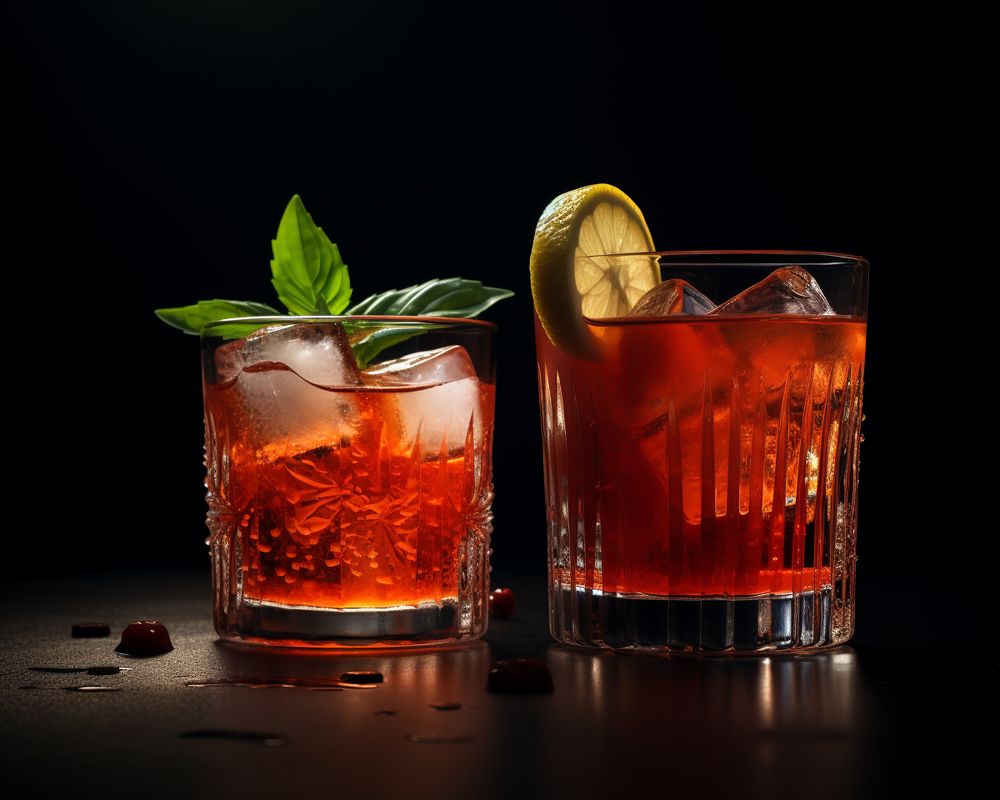
A Bloody Mary is known for its tomato-red color and is often garnished with a celery stalk, lemon slice, and sometimes even a mini skewer of pickles, olives, or shrimp. A Negroni, with its deep ruby hue, is elegantly served with a simple orange peel garnish.
What is the nutritional information for these cocktails?
A standard Bloody Mary contains around 140 calories and is gluten-free. It’s also high in sodium due to the tomato juice and seasonings. A Negroni, on the other hand, has about 186 calories and is also gluten-free. Both should be consumed in moderation due to their alcohol content.
How much does it cost to make these cocktails?
The cost of making a Bloody Mary or Negroni can vary based on the brands of alcohol you choose. On average, you can expect to spend around $2-$3 per Bloody Mary and $3-$4 per Negroni at home.
What is the alcohol content of these cocktails?
A standard Bloody Mary has around 10% alcohol by volume (ABV), depending on how much vodka is used. A Negroni is significantly stronger with an ABV of around 24% due to its equal parts of gin, Campari, and vermouth.
Unique Insight: While both the Bloody Mary and Negroni have distinct and robust flavors, the choice between the two often comes down to the occasion and personal preference. A Bloody Mary, with its savory, spicy kick, is a brunch favorite and a popular hangover cure. In contrast, the Negroni, with its bitter, complex layers, is a classic aperitif, perfect for sipping before a meal. Understanding these nuances can enhance your cocktail experience and appreciation.